Water Conservation in Data Centers: How Dry Coolers Cut Water Usage by 95%
- Share
- publisher
- Boyi Cooling
- Issue Time
- Aug 28,2026
Summary
Data centers consume 1.8L of water per kWh using traditional cooling towers. This guide explains how dry coolers achieve 95%+ water reduction through closed-loop heat rejection, covers regulatory drivers from US and EU legislation, examines WUE metric improvements for ESG reporting, and presents a real-world Dubai hybrid case study. Includes ROI analysis showing 3-5 year payback from water cost savings, chemical treatment elimination, and compliance cost avoidance.
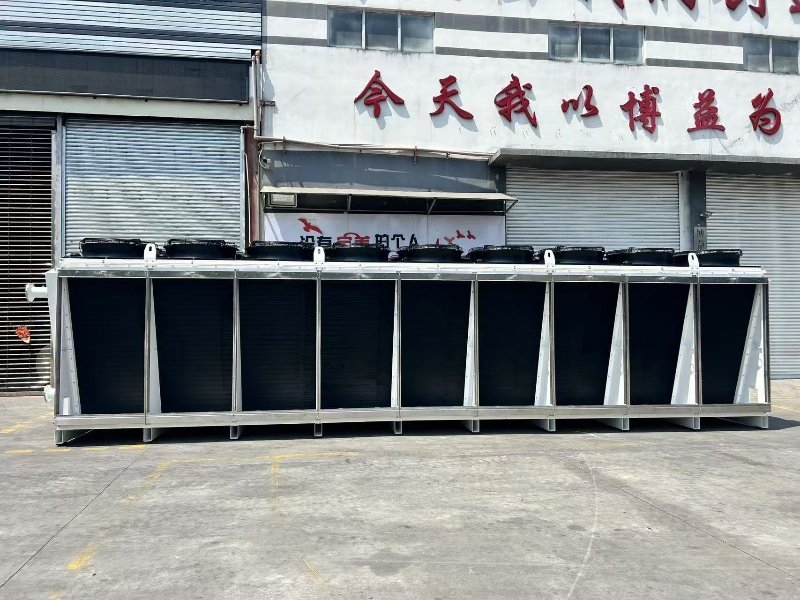
Water Conservation in Data Centers: How Dry Coolers Cut Water Usage by 95%
Data centers are the backbone of the digital economy, but they are also among the most water-intensive facilities on the planet. A typical data center consumes approximately 1.8 liters of water per kWh of energy used, translating to millions of gallons annually for a single hyperscale facility. As global computing demand surges, driven by AI workloads, cloud expansion, and edge deployments, water consumption has emerged as a critical sustainability challenge. Dry cooler technology offers a compelling solution, reducing data center water usage by up to 95% compared to traditional cooling towers. This article examines the water crisis in data centers, explains how dry coolers achieve dramatic water savings, and explores the regulatory, financial, and ESG drivers accelerating adoption.
The Hidden Water Footprint of Data Center Cooling
When most people think about data center resource consumption, they focus on electricity. However, water is equally critical, and in many regions, it is far more scarce. A 50MW data center with traditional evaporative cooling can consume between 200,000 and 300,000 gallons of water per day, roughly equivalent to the daily water usage of a small city. This water is used primarily in cooling towers, where evaporation removes heat from the recirculating chilled water loop.
The problem is worsening. The rapid growth of AI-driven data centers with high-density racks generating 40-100 kW per cabinet means more heat to reject, more cooling capacity required, and ultimately more water consumed. Industry analysts estimate that global data center water consumption will reach 4.5 billion cubic meters by 2030, a figure that has drawn scrutiny from regulators, environmental groups, and local communities worldwide.
Boyi Cooling, with over 20 years of thermal engineering experience and installations across 30+ countries, has witnessed this shift firsthand. Data center operators increasingly prioritize water-efficient cooling solutions not merely as a sustainability initiative, but as an operational necessity driven by regulatory compliance, community relations, and long-term cost management.
Cooling Tower Water Consumption: Where the Water Goes
To understand how dry coolers save water, it is essential to understand where cooling towers lose it. Traditional cooling towers use evaporative cooling, which removes heat through the phase change of water from liquid to vapor. This process involves three distinct water loss mechanisms:
Evaporative Loss
The primary cooling mechanism. For every 1°F of cooling, approximately 1% of recirculating water evaporates. A 1,000-ton cooling tower operating at full load evaporates roughly 24,000 gallons per day, which must be continuously replenished.
Drift Loss
Small water droplets carried out of the tower by the exhaust air stream. Modern drift eliminators reduce this to 0.002-0.005% of recirculation flow, but even at these low rates, drift accounts for hundreds of gallons per day in large systems.
Blowdown Loss
Water intentionally discharged to control dissolved solids concentration. As water evaporates, minerals concentrate in the remaining water. Blowdown removes this concentrated water to prevent scale formation and corrosion, typically wasting 0.5-2% of recirculation flow.
Combined, these three mechanisms mean that a conventional cooling tower system loses nearly all of its recirculating water volume every day. For a large data center, this translates to continuous water intake from municipal sources or aquifers, creating strain on local water infrastructure and raising operational costs in water-stressed regions.
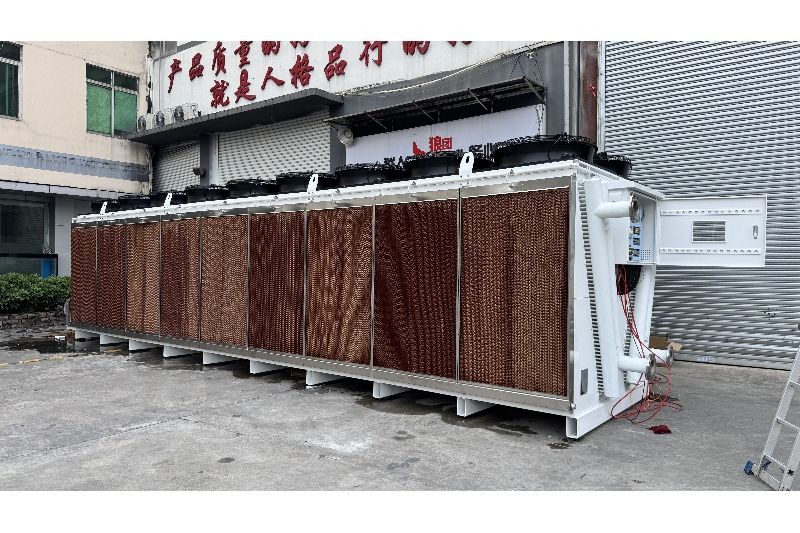
Boyi Cooling's V-type dry cooler with wet pads, designed for hybrid adiabatic operation that minimizes water use while maintaining thermal performance in hot climates.
Dry Cooler Closed-Loop Principle: Zero Water for Heat Rejection
The fundamental difference between a cooling tower and a dry cooler lies in the heat rejection mechanism. While cooling towers rely on water evaporation, dry coolers use ambient air to cool the process fluid directly through finned tube heat exchangers, with no water consumed in the heat rejection process.
Here is how a dry cooler closed-loop system works:
- Hot fluid enters the coil: The process fluid, typically a glycol-water mixture, exits the data center at elevated temperature and enters the dry cooler's finned tube coil.
- Ambient air flows over fins: Axial fans draw ambient air across the finned tube surface. Heat transfers from the process fluid through the tube wall and fins to the air.
- Cooled fluid returns: The cooled process fluid exits the dry cooler and returns to the data center to absorb more heat, completing the closed loop.
- Warm air exhausts: The heated air is discharged to the atmosphere. No water is evaporated, no water is consumed, and no water treatment chemicals are required.
This closed-loop design means that water is used only as the heat transfer fluid within the sealed system, with negligible make-up water needed to compensate for minor leaks. The result is a cooling system that uses essentially zero water for heat rejection, compared to the thousands of gallons consumed daily by an equivalent cooling tower.
Quantified Savings: 95%+ Water Reduction in Real-World Deployments
The claim of 95% water reduction is not theoretical. It is backed by extensive real-world data from operational data centers that have transitioned from cooling towers to dry cooler systems. Consider the following comparison for a representative 10MW data center:
| Metric | Cooling Tower System | Dry Cooler System |
|---|---|---|
| Daily water consumption | ~50,000 gallons | ~500 gallons (make-up only) |
| Annual water consumption | ~18.3 million gallons | ~183,000 gallons |
| Water reduction | Baseline | 99% reduction |
| Chemical treatment cost | $50,000-$100,000/year | $0 (no water treatment needed) |
| Water discharge permit | Required | Not required |
| Legionella risk | Present (CDC-regulated) | None (no standing water) |
Even in hybrid configurations where adiabatic pre-cooling is used during peak summer conditions, total annual water consumption remains 80-90% lower than full evaporative cooling. Boyi Cooling's experience across multiple installations confirms these figures, with clients reporting water cost savings of $200,000 to $500,000 annually for mid-size data center facilities.
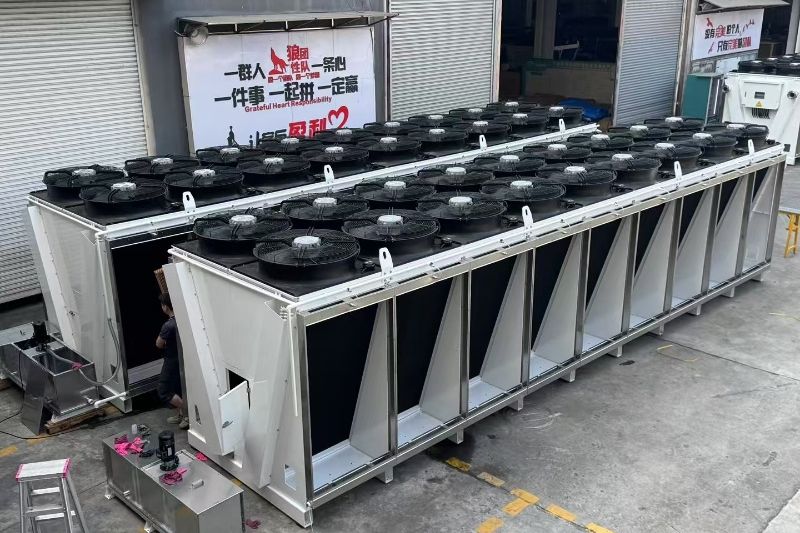
667KW V-Type Dry Cooler with Wet Pads for Adiabatic Air Cooling
Custom V-Type Dry Cooler with Wet Pads for bitcoin mining, engineered for hybrid dry-adiabatic operation that maximizes water efficiency while maintaining cooling performance in high-ambient environments.
View Product DetailsRegulatory Pressure: The Policy Landscape Is Shifting
Water conservation in data centers is no longer merely a voluntary sustainability initiative. Governments and regulatory bodies worldwide are implementing policies that directly address data center water consumption:
United States
Several U.S. states have introduced legislation in 2024-2025 requiring data centers to report water usage publicly. Arizona, Texas, and Georgia, all facing water stress, have proposed bills mandating WUE disclosures for new data center permits. Virginia's legislature has debated requiring water impact assessments for facilities exceeding 10MW.
European Union
The EU Water Resilience Strategy, adopted in 2025, includes specific provisions for data center water stewardship. The updated Energy Efficiency Directive requires large data centers to report both PUE and WUE metrics, creating regulatory pressure to adopt water-free cooling technology.
These regulatory developments mean that data center operators choosing traditional cooling tower systems may face permitting delays, higher compliance costs, and potential operational restrictions in water-stressed regions. Dry coolers, by eliminating process water consumption, simplify regulatory compliance and future-proof facilities against tightening water regulations.
For organizations uncertain about which cooling approach best meets their regulatory requirements, consulting with an experienced manufacturer like Boyi Cooling can clarify compliance obligations and identify the optimal cooling configuration for specific regional constraints.
ESG Benefits: Improving Water Usage Effectiveness (WUE)
The Green Grid introduced Water Usage Effectiveness (WUE) as the industry-standard metric for data center water efficiency. WUE is calculated as:
A lower WUE indicates better water efficiency. Traditional data centers with cooling towers typically achieve WUE values of 1.5 to 2.0 L/kWh, meaning they consume 1.5 to 2.0 liters of water for every kWh of IT load. In contrast, data centers using dry coolers can achieve WUE values below 0.1 L/kWh, representing a 95%+ improvement.
This dramatic improvement in WUE has significant ESG reporting implications:
- CDP Water Security: Dry cooler adoption directly improves CDP water security scores, which are increasingly scrutinized by investors and stakeholders.
- GRI 303 Standard: The Global Reporting Initiative's water and effluents standard requires organizations to report water withdrawal, consumption, and discharge. Dry coolers simplify this reporting by virtually eliminating water withdrawal for cooling.
- Sustainability-Linked Financing: Green bonds and sustainability-linked loans often include water reduction targets. Dry cooler adoption helps organizations meet these targets, potentially lowering borrowing costs.
- Stakeholder Confidence: Community concerns about data center water consumption are growing, particularly in drought-prone regions. Demonstrating measurable water reduction builds community trust and reduces opposition to facility expansion.
Regional Relevance: Water-Scarce Regions Drive Adoption
The urgency of water conservation varies dramatically by geography. In water-abundant regions, the case for dry coolers may be primarily driven by cost and maintenance advantages. In water-scarce regions, however, dry coolers may be the only viable cooling solution for new data center construction.
Middle East
Countries like the UAE and Saudi Arabia face extreme water scarcity, with desalination providing the majority of freshwater. Data center water costs can exceed $15 per 1,000 gallons, making dry coolers economically essential. The region's high ambient temperatures necessitate hybrid adiabatic configurations for peak summer performance.
U.S. Southwest
Arizona, Nevada, and New Mexico face ongoing drought conditions and Colorado River water allocation disputes. Data centers in Phoenix and Las Vegas are under particular scrutiny, with local utilities imposing water usage surcharges that can add hundreds of thousands of dollars in annual operating costs.
China & India
Rapid data center growth in water-stressed regions of northern China and India has prompted government reviews of data center water consumption. China's "East Data West Computing" project explicitly considers water availability in site selection, favoring regions where dry cooling is feasible.
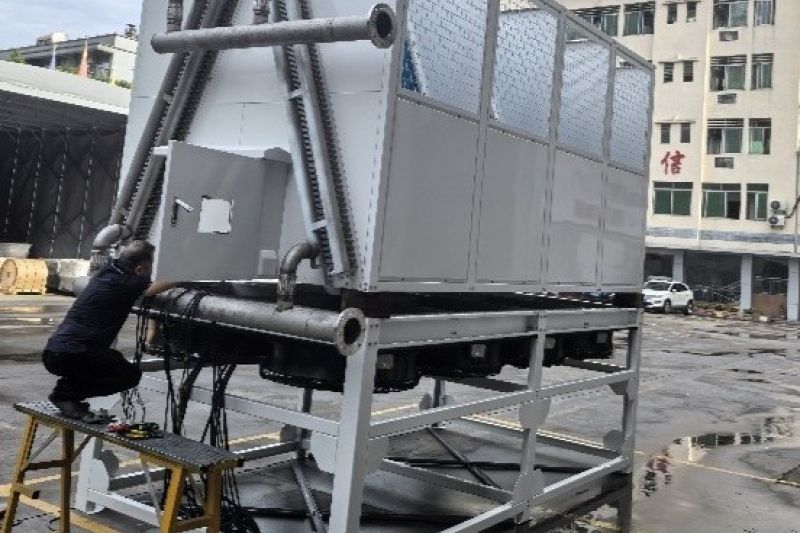
Stainless steel inverted V-type dry cooler designed for water-free heat rejection in arid and high-ambient environments.
Boyi Case Study: Dubai Hybrid Dry Cooler with Wet Curtain
One of the most instructive examples of water-smart cooling design comes from a Boyi Cooling project in Dubai, where ambient temperatures regularly exceed 45°C (113°F) during summer months. In such extreme conditions, a pure dry cooler alone cannot achieve the required approach temperature, making some form of evaporative augmentation necessary.
The solution was a hybrid V-type dry cooler with a wet curtain system that operates in three modes:
During cooler months (October-April, when ambient temperatures drop below 30°C), the system operates as a pure dry cooler with zero water consumption. Fans draw ambient air over the finned coil, rejecting heat without any water usage. This mode accounts for 60-70% of annual operating hours.
During shoulder seasons (May-June, September-October, 28-38°C ambient), the wet curtain system pre-cools incoming air through indirect evaporation, reducing inlet air temperature by 8-12°C. Water usage is minimal, typically 10-15% of what a full cooling tower would consume.
During peak summer (July-August, above 38°C), the wet curtain operates at full capacity to maximize pre-cooling. Even in this mode, total daily water consumption is under 2,000 gallons, compared to 50,000+ gallons for an equivalent cooling tower.
The result: annual water consumption was reduced by approximately 92% compared to a conventional cooling tower system, while maintaining the required cooling capacity year-round. This project demonstrates that even in the most challenging climates, hybrid dry cooler technology can achieve near-water-free operation while meeting thermal performance requirements.
ROI of Water Savings: Beyond the Environmental Case
While the environmental and regulatory benefits of dry cooler adoption are compelling, the financial case is equally strong. The return on investment for switching from cooling towers to dry coolers encompasses multiple cost categories:
Direct Water Cost Savings
At an average municipal water rate of $4-8 per 1,000 gallons (higher in water-stressed regions), a 10MW data center can save $60,000-$150,000 annually in direct water purchase costs. In regions with water surcharges or tiered pricing for large consumers, savings can be significantly higher.
Chemical Treatment Elimination
Cooling towers require continuous chemical treatment for scale inhibition, corrosion control, and biological growth prevention. Annual chemical costs range from $50,000 to $100,000 for a mid-size data center, plus the labor and monitoring overhead. Dry coolers eliminate these costs entirely.
Reduced Maintenance
Cooling towers require quarterly inspections, monthly water testing, drift eliminator cleaning, and periodic descaling. Dry coolers require only periodic fan motor lubrication, coil cleaning, and filter replacement, reducing maintenance labor by 60-70%.
Compliance Cost Avoidance
Water discharge permits, NPDES compliance, Legionella monitoring programs, and cooling tower registration fees add $20,000-$50,000 annually. Dry coolers eliminate most of these regulatory obligations, reducing both direct costs and administrative burden.
When combined, these savings typically deliver a payback period of 3-5 years for the incremental investment in dry cooler technology compared to cooling towers. In water-stressed regions with high water costs and aggressive regulatory oversight, payback can be achieved in under 2 years.
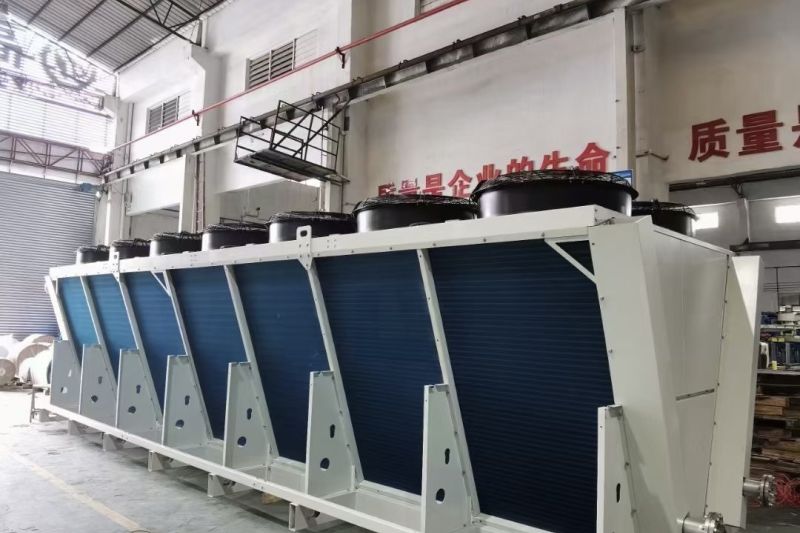
High-efficiency V-type dry cooler featuring copper tube and aluminum fin construction, delivering exceptional thermal performance with zero process water consumption.
Implementation Considerations and Best Practices
Transitioning to dry cooler technology requires careful planning and engineering to ensure optimal performance. Key considerations include:
- Climate analysis: Conduct a thorough analysis of local ambient temperature data, including wet-bulb and dry-bulb temperatures, to determine the appropriate dry cooler sizing and whether adiabatic augmentation is needed for peak conditions.
- Fluid selection: Use propylene glycol-water mixtures with appropriate freeze protection levels for the local climate. The glycol concentration affects heat transfer efficiency, so balance freeze protection with thermal performance.
- Variable-speed fan control: Equip dry coolers with EC (electronically commutated) fan motors and variable-speed drives to modulate airflow based on actual cooling load, reducing energy consumption by 30-50% compared to fixed-speed operation.
- BMS integration: Connect the dry cooling system to the building management system for real-time monitoring, performance optimization, and predictive maintenance alerts.
- Redundancy planning: Design N+1 or 2N redundancy to ensure continuous cooling availability during maintenance or equipment failure.
Working with an experienced manufacturer like Boyi Cooling ensures that these considerations are properly addressed. With 20+ years of thermal engineering expertise and a track record of installations across 30+ countries, Boyi's engineering team can design and manufacture custom dry cooler solutions optimized for specific site conditions, climate profiles, and operational requirements.
The Future of Water-Smart Data Center Cooling
Looking ahead, several trends are converging to make dry cooler technology even more compelling for data center operators:
- Water pricing escalation: As water scarcity intensifies globally, municipal water rates are projected to increase 5-8% annually in water-stressed regions, further improving dry cooler ROI.
- Stricter WUE targets: Industry consortiums are advocating for WUE targets below 0.5 L/kWh by 2030, a threshold that is virtually impossible to achieve with cooling towers but readily attainable with dry coolers.
- AI-driven optimization: Machine learning algorithms integrated with IoT sensors can optimize dry cooler operation in real-time, further reducing energy consumption while maintaining zero-water heat rejection.
- Hybrid system advances: Next-generation adiabatic pre-cooling systems are being developed that use 50% less water than current wet curtain designs, pushing hybrid systems closer to true zero-water operation.
- Heat reuse integration: Dry cooler closed-loop systems are more compatible with heat recovery and reuse applications, enabling data center waste heat to be redirected to district heating or industrial processes.
As these trends mature, the gap between water-consuming and water-free cooling technologies will continue to widen. Data center operators investing in dry cooler infrastructure today are positioning themselves for long-term regulatory compliance, cost efficiency, and sustainability leadership.
Ready to Reduce Your Data Center Water Usage?
Boyi Cooling specializes in custom dry cooler solutions engineered for your specific climate, capacity, and regulatory requirements. With over two decades of manufacturing expertise and a proven track record across 30+ countries, our team can help you transition to water-efficient cooling without compromising performance.
Request a Custom Quote Learn more about Boyi CoolingKey Takeaways
- Data centers using cooling towers consume 1.8L+ of water per kWh, with a 50MW facility using up to 300,000 gallons daily.
- Dry coolers use closed-loop heat rejection through finned tube heat exchangers, consuming essentially zero water for cooling.
- Real-world deployments demonstrate 95-99% water reduction compared to equivalent cooling tower systems.
- Regulatory pressure from U.S. state legislation and EU directives is accelerating the shift toward water-free cooling.
- WUE improvements from 1.5-2.0 L/kWh to below 0.1 L/kWh deliver significant ESG and sustainability reporting benefits.
- Hybrid adiabatic dry coolers, like Boyi's Dubai project, achieve 90%+ water savings even in extreme climates.
- Total ROI from water cost, chemical elimination, maintenance reduction, and compliance savings typically delivers 3-5 year payback.