Understanding Dry Cooler Technology: Five Trends for Optimized Cooling
- Share
- Issue Time
- Jan 20,2026
Summary
Discover the five key trends driving optimized dry cooler technology in modern data centers: water conservation, energy efficiency via free cooling, hybrid system integration, smart controls with advanced materials, and modular scalability—enabling sustainable, reliable, and cost-effective thermal management for high-density computing.
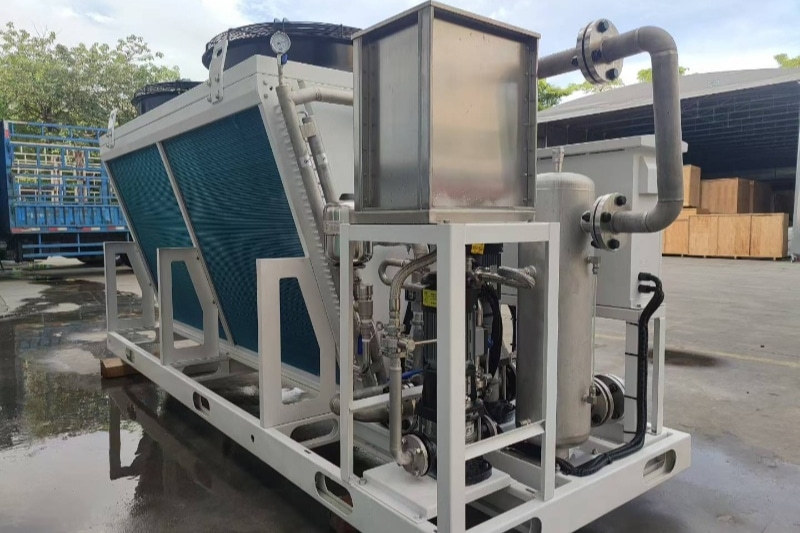
As data centers continue to be the cornerstone of our digital economy, the demand for high computational power is escalating, leading to increased heat generation and a critical need for efficient cooling solutions. Traditionally, air cooling dominated, but with the advent of high-density workloads like AI and machine learning, more sophisticated thermal management strategies are becoming imperative. Without proper cooling, data centers can quickly overheat, leading to system failures, downtime, and potential data loss.
The dry cooler market is experiencing robust growth, with significant expansion projected as demand for energy efficiency and water conservation grows. This expansion is largely driven by the increasing need for sustainable practices, stringent environmental regulations, and continuous technological advancements. This blog aims to explore the key trends shaping optimized cooling through dry cooler technology, particularly in data center environments. Embracing these trends is crucial for maintaining optimal operating temperatures, extending equipment lifespan, and reducing the significant operational costs associated with cooling.
Key Takeaways
- The Problem with Traditional Cooling: As data centers pack more computing power into smaller spaces to handle tasks like AI and real-time analytics, traditional air conditioning (CRAC) units are struggling to keep up. This leads to hotspots, thermal throttling (where chips slow down to prevent damage), and a shortened lifespan for expensive server components.
- How Dry Coolers Work: A dry cooler operates on a simple, closed-loop principle. A process fluid, typically a water-glycol mixture, absorbs heat from the data center equipment. This hot fluid is then pumped outside to the dry cooler unit, which is essentially a large radiator. Fans blow ambient air across a series of finned coils containing the hot fluid, transferring the heat from the fluid to the air before the cooled fluid is pumped back inside.
- Trend 1: Water Conservation is Paramount: Unlike cooling towers that use evaporation and consume massive amounts of water, dry coolers use a closed-loop system that requires no water for the heat rejection process itself. This makes them a critical technology for data centers in water-scarce regions or for any organization aiming to improve its environmental, social, and governance (ESG) profile.
- Trend 2: Boosting Energy Efficiency (PUE): Dry coolers significantly reduce energy consumption by eliminating the need for large pumps and compressors found in traditional chiller systems. They enable "free cooling" whenever the outside air temperature is sufficiently lower than the process fluid, using a fraction of the energy. This directly improves a data center's Power Usage Effectiveness (PUE), a key metric for operational efficiency.
- Trend 3: The Power of Hybrid Systems: For maximum efficiency across all climates, dry coolers are increasingly integrated into hybrid systems. These setups can switch between dry cooling mode during cooler months and other methods like adiabatic (light misting) or liquid cooling during hotter periods, ensuring optimal performance and energy use year-round.
- Trend 4: Smart Technology and Materials: Modern dry coolers are not just simple radiators. They incorporate intelligent control systems with IoT sensors that adjust fan speeds in real-time based on the thermal load and ambient conditions, optimizing energy use. Advances in materials, such as aluminum microchannel heat exchangers, are also improving heat transfer efficiency and corrosion resistance.
- Trend 5: Modularity for Scalability and Reliability: Dry cooler systems are often modular, allowing data centers to scale their cooling capacity as their IT load grows. This "pay-as-you-grow" approach prevents overspending on underutilized capacity. Furthermore, their simple, robust design with fewer moving parts than cooling towers leads to higher reliability and lower maintenance costs.
The Evolution and Importance of Dry Cooler Technology in Data Centers
The journey of data center cooling is a story of constant innovation, driven by the relentless pace of technology. In the beginning, simple computer room air conditioning (CRAC) units, similar to standard office AC, were sufficient. However, as the industry evolved from basic data processing to housing the high-density servers that power AI, cloud computing, and big data analytics, these legacy cooling methods quickly showed their limitations. The need to manage immense heat loads efficiently and sustainably has brought advanced solutions like dry cooler technology to the forefront.
From Traditional Cooling to Dry Cooler Significance
For decades, the standard approach to data center cooling involved raised floors and a flood of cold air. CRAC or Computer Room Air Handler (CRAH) units would pump chilled air into the space under a raised floor, which would then enter server racks through perforated tiles. This method worked when server densities were low, but it is notoriously inefficient, often resulting in poor Power Usage Effectiveness (PUE) ratings and high energy costs.
As server racks became more powerful, cooling technologies evolved to be more precise. In-row cooling units placed directly within the server rows offered more targeted heat removal. Concurrently, liquid cooling solutions, which use the superior thermal conductivity of liquids to draw heat away, began to gain traction for the most demanding applications. Within this evolving landscape, dry coolers have emerged as a pivotal technology, offering a balance of efficiency, sustainability, and reliability that addresses many of the shortcomings of older systems.
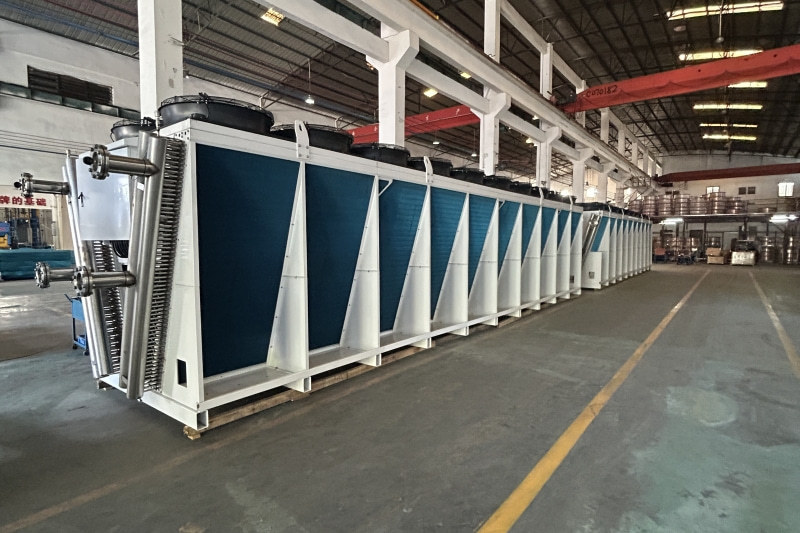
High-density workloads are the new normal in data centers. Racks that once consumed a few kilowatts of power now regularly exceed 15-20 kW, with high-performance computing (HPC) and AI clusters pushing well beyond that. This concentration of power generates an immense amount of heat in a very small space, creating several critical challenges that traditional cooling struggles to solve:
- Thermal Throttling and Failure: Excessive heat forces modern CPUs and GPUs to "throttle," or reduce their performance, to prevent physical damage. Persistent high temperatures degrade sensitive electronic components, drastically reducing the lifespan of expensive hardware and leading to costly, frequent replacements.
- Hotspots and Inefficient Airflow: In densely packed racks, airflow can become restricted, creating "hotspots" where temperatures soar even if the rest of the room is cool. This leads to inefficient and uneven cooling, forcing operators to overcool the entire facility just to manage these problem areas, wasting a tremendous amount of energy.
- Skyrocketing Operational Costs: Cooling can account for up to 40% of a data center's total energy consumption. With rising energy prices and increasing rack densities, inefficient cooling systems lead to unsustainable operational expenses.
- The Limits of Air: Air has poor thermal transfer properties compared to liquid. As rack densities increase, there is a physical limit to how much heat can be effectively removed using air alone, pushing the industry towards more advanced solutions.
Dry coolers help address these issues by providing a scalable and efficient way to reject heat, forming a core component of modern thermal management strategies that protect hardware, ensure performance, and control costs.
Understanding How a Dry Cooler Works
A dry cooler is a heat rejection device that uses ambient air to cool a liquid in a closed-loop system, without the liquid ever coming into direct contact with the air. Think of it like the radiator in your car, but on a much larger scale. The principle is based on simple and effective convection and conduction.
Here is a step-by-step breakdown of the process:
- Heat Absorption: A process fluid, typically a water or water-glycol mixture, circulates within the data center. It passes through rear-door heat exchangers, liquid-cooled plates on servers, or other cooling apparatus, absorbing the waste heat generated by the IT equipment.
- Transportation: The now-hot fluid is pumped out of the data center to the externally-located dry cooler unit.
- Heat Exchange: Inside the dry cooler, the fluid flows through a network of tubes that are covered in thin metal plates called fins. This "finned pack" or "coil" massively increases the surface area for heat transfer.
- Airflow and Heat Dissipation: Powerful fans draw in ambient (outside) air and force it across the finned coils. The heat from the process fluid transfers through the tube and fin walls into the cooler moving air, which is then expelled into the environment.
- Recirculation: The cooled fluid is then pumped back into the data center to begin the cycle again, continuously removing heat.
The core components of a dry cooler are relatively simple and robust:
| Component | Function | Material/Design Notes |
|---|---|---|
| Finned Coils | The heart of the system; facilitates heat transfer from the liquid to the air. | Typically made of copper, steel, or stainless steel tubes with aluminum fins to maximize surface area and heat exchange. |
| Fans | Drive ambient air across the coils to carry heat away. | Modern units use high-efficiency, variable-speed Electronically Commutated (EC) fans to minimize energy use and noise. |
| Frame/Casing | Protects the internal components from weather and provides structural support. | Often constructed from epoxy-coated or galvanized steel for corrosion resistance. |
| Fluid Pump | Circulates the process fluid between the heat source (data center) and the dry cooler. | Sized according to the flow rate and pressure required for the cooling loop. |
Because this is a closed-loop system, it eliminates water loss from evaporation and minimizes the risks of contamination and scaling that plague open-loop systems like cooling towers.
Mitigating Risks and Enhancing Operational Efficiency with Dry Coolers
Integrating dry coolers into a data center's thermal management strategy does more than just lower the temperature; it mitigates significant operational risks and boosts overall efficiency. Compared to other cooling technologies, particularly traditional chillers and water-based cooling towers, dry coolers offer a compelling set of advantages.
One of the greatest risks in a data center is the presence of water near sensitive electronics. While direct liquid cooling is highly effective, it comes with the inherent risk of leaks, which can cause short circuits, corrosion, and catastrophic hardware failure. Cooling towers, which are open-loop systems, introduce additional risks:
- Contamination and Biological Growth: Open systems are susceptible to airborne debris and biological growth, including harmful bacteria like Legionella, requiring constant and costly water treatment. Dry coolers, being closed-loop, nearly eliminate the need for chemical water treatment.
- Scaling and Fouling: Minerals in the evaporated water can build up as scale inside cooling tower components, impeding performance and requiring intensive maintenance. This is not an issue for dry coolers.
- Water Scarcity and Cost: In many regions, water is a scarce and expensive resource. Cooling towers consume vast quantities through evaporation, making them operationally expensive and environmentally unsustainable in these areas.
By moving to a closed-loop dry cooling system, operators can immediately enhance reliability and reduce maintenance overhead. The simple, robust design of dry coolers means there are fewer moving parts to fail and a much simpler maintenance routine, leading to lower long-term operating costs and increased system uptime. Furthermore, their ability to enable "free cooling" modes dramatically cuts energy consumption, directly improving the bottom line and helping data centers meet increasingly stringent environmental regulations.
Trend 1: Prioritizing Water Conservation and Environmental Impact with Dry Coolers
The data center industry is facing a crucial sustainability challenge. Globally, these facilities are immense consumers of both power and water, placing significant strain on local resources. A single large data center can use millions of gallons of water per day for cooling, a figure that is becoming increasingly untenable in a world facing growing water scarcity. This has put intense public and regulatory pressure on operators to adopt more responsible practices. Dry coolers have emerged as a cornerstone technology in this effort, offering a direct path to dramatically reducing water consumption and a facility's overall environmental footprint.
Eliminating Water Usage in Data Center Cooling
The most significant environmental advantage of dry coolers is their ability to reject heat without consuming water. Traditional evaporative cooling towers, a long-time industry staple, work by evaporating water to dissipate heat. While effective, this process leads to staggering water loss and has secondary environmental effects.
Here's how dry coolers fundamentally change the equation:
- Closed-Loop Operation: As previously discussed, dry coolers use a self-contained, closed-loop system. The same coolant is circulated continuously, so there is no water loss due to evaporation. This stands in stark contrast to cooling towers, which constantly need to replenish the water that is lost to the atmosphere.
- Avoiding Water Treatment Chemicals: Cooling towers require a host of chemicals to prevent scaling, corrosion, and biological growth. These chemicals can be released into the environment through "drift" (water droplets carried out of the tower by air) or blowdown (the intentional draining of water to remove mineral concentrations). Dry cooler systems eliminate the need for these extensive chemical treatments, reducing their environmental impact.
- Resilience in Water-Stressed Regions: For data centers located in arid or drought-prone areas, a reliance on water-intensive cooling is a major business risk. Water restrictions or outright prohibitions can threaten operations. Dry coolers provide operational certainty by decoupling the cooling process from the local water supply.
A study by Microsoft highlighted that advanced cooling methods can have a significant impact, with certain liquid cooling solutions—which often use dry coolers for final heat rejection—reducing water consumption by 31 to 52 percent over their life cycles compared to traditional air cooling. This move towards waterless cooling is not just an operational improvement; it's a strategic necessity for long-term sustainability.
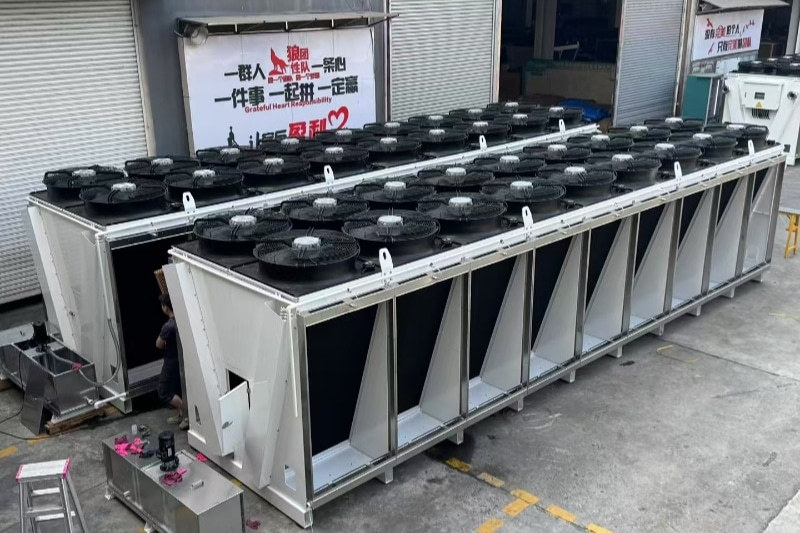
The Role of Dry Coolers in Sustainable Practices
The adoption of dry coolers is a key component of a broader movement toward building "green" data centers and achieving corporate Environmental, Social, and Governance (ESG) goals. Today's investors and customers demand that companies demonstrate a real commitment to sustainability, and reducing resource consumption is a primary metric.
Here is how dry coolers contribute to a facility's sustainability profile:
- Improved Water Usage Effectiveness (WUE): WUE is a key metric, similar to PUE, that measures the ratio of a data center's water use to the energy consumption of its IT equipment. By virtually eliminating water consumption for heat rejection, dry coolers can dramatically improve a facility's WUE score.
- Reduced Carbon Footprint: While the primary benefit is water savings, the energy efficiency of dry coolers also contributes to a lower carbon footprint. When operating in "free cooling" mode, they consume far less electricity than traditional chillers, reducing the demand on power grids that may be reliant on fossil fuels.
- Alignment with ESG Mandates: For publicly traded companies and those in highly regulated industries, demonstrating a commitment to ESG principles is no longer optional. Implementing water-conserving technologies like dry coolers provides a tangible, measurable way to report on environmental stewardship, enhancing corporate reputation and investor confidence.
- Enabling Heat Reuse: The warm liquid exiting the data center en route to the dry cooler contains a significant amount of low-grade thermal energy. This "waste heat" can be captured and repurposed for other applications, such as heating adjacent office buildings or contributing to a local district heating system. This practice, known as heat reuse, turns a waste product into a valuable resource, further improving the overall energy efficiency and sustainability of the entire operation.
Ultimately, the choice to use dry cooling technology is a statement that an organization is proactive about its environmental impact. It demonstrates an understanding that long-term operational viability is intrinsically linked to responsible resource management.
Trend 2: Boosting Energy Efficiency and Reducing Operational Costs with Dry Coolers
While water conservation is a critical environmental driver, the financial incentives for adopting dry cooler technology are equally compelling. Data center cooling is a major line item on any operational budget, often accounting for nearly 40% of a facility's total electricity bill. Dry coolers attack these costs on two fronts: by fundamentally consuming less power than traditional chiller systems and by enabling "free cooling" for a significant portion of the year. This dual advantage leads to substantial energy savings and a direct, positive impact on a data center's Power Usage Effectiveness (PUE) metric.
Lower Power Consumption and Free Cooling Capabilities of Dry Coolers
The primary source of energy savings with dry coolers comes from what they don't have: a vapor compression cycle. Conventional chiller systems are complex refrigeration units that use high-energy compressors to cool a refrigerant, which in turn cools the process water. This process is energy-intensive by nature.
Dry coolers, in contrast, are much simpler. Their main power draw comes from the fans needed to move air across the heat exchanger coils and the pump that circulates the coolant. When comparing a typical 50HP process cooling application, a traditional air-cooled chiller might require 50-60HP from its compressor, whereas a dry cooler could achieve the same cooling capacity with as little as 10HP for its fans. This represents a potential 80% reduction in horsepower for that part of the cooling load.
This inherent efficiency is supercharged by the capability for free cooling. Free cooling, also known as economization, is a method that uses low ambient air temperatures to cool the data center load without engaging mechanical refrigeration. Here’s how it works with a dry cooler:
- When It Works: Whenever the outside air temperature is lower than the temperature of the water/glycol fluid returning from the data center, the dry cooler can reject heat effectively using only its fans.
- The Benefit: During these periods, the energy-hungry chillers can be partially or completely turned off. The only energy consumed for cooling is the power for the dry cooler's fans and the circulation pump. In many climates, this mode of operation can be active for a significant portion of the year, especially during fall, winter, and spring, as well as overnight during the summer.
- Energy Savings: Operating in free cooling mode can reduce energy consumption by up to 80% or more compared to running a full mechanical refrigeration cycle. This not only slashes operating costs but also extends the lifespan of the chiller equipment by reducing its runtime.
Even in scenarios where the ambient temperature isn't low enough for 100% free cooling, dry coolers can still be used to pre-cool the fluid before it enters the chiller, reducing the load on the compressor and still saving significant energy.
Optimizing PUE with Dry Cooler Integrations
Power Usage Effectiveness (PUE) is the industry-standard metric for measuring the energy efficiency of a data center. It's calculated by dividing the total energy consumed by the facility by the energy delivered to the IT equipment.
PUE = Total Facility Energy / IT Equipment Energy
An ideal PUE would be 1.0, meaning every single watt of power entering the building goes directly to the servers, with zero power used for cooling, lighting, or power distribution losses. In reality, a lower PUE indicates a more efficient facility. Historically, data centers with traditional air cooling often had PUEs of 2.0 or higher, meaning for every watt used by the IT load, another watt was used just to support it.
Dry coolers are a powerful tool for driving down PUE. By drastically cutting the energy consumed by the cooling infrastructure, they directly reduce the "Total Facility Energy" numerator in the PUE equation.
- Direct PUE Impact: A shift from energy-intensive chillers to a system utilizing dry cooler-based free cooling has a direct and measurable effect. Some case studies have shown that implementing direct liquid cooling (which often relies on dry coolers for final heat rejection) can improve data center PUE by an average of 8-10%, with some improvements reaching nearly 14%. Facilities designed from the ground up with these technologies can achieve ultra-low PUEs in the 1.1 to 1.2 range.
- Balancing PUE and WUE: In the past, some operators would improve their PUE by using highly efficient evaporative cooling towers. However, this often came at the expense of massive water consumption, leading to a poor Water Usage Effectiveness (WUE) score. Dry coolers offer a unique advantage by allowing operators to optimize for both metrics simultaneously—reducing both energy and water usage.
- Enabling Higher Operating Temperatures: Modern IT equipment is designed to operate safely at higher temperatures than in the past, with ASHRAE recommending allowable inlet temperatures up to 27°C (80.6°F) for some classes of hardware. Higher operating temperatures increase the number of hours per year that a dry cooler can operate in free cooling mode, further improving PUE.
By integrating dry coolers, data center operators are not just making a green choice; they are making a sound financial decision that lowers operational expenditures and improves one of the most critical benchmarks of facility performance.
Trend 3: The Synergy of Hybrid Cooling with Dry Cooler Solutions
The data center industry is not a one-size-fits-all environment. Workloads, climates, and facility constraints vary dramatically, meaning the optimal cooling solution is rarely a single technology. This has given rise to a powerful trend: hybrid cooling. A hybrid cooling system strategically combines two or more cooling methods—such as dry cooling, adiabatic cooling, and liquid cooling—to create a flexible and highly efficient solution that adapts to changing conditions. This approach allows data center operators to leverage the best attributes of each technology, maximizing performance while minimizing resource consumption.
Combining Dry and Liquid Cooling for Optimal Performance
The partnership between dry cooling and liquid cooling is one of the most effective hybrid strategies for modern data centers. As rack densities soar due to AI and HPC, direct liquid cooling (either direct-to-chip or immersion) is becoming necessary to remove heat efficiently at the source. However, the heat absorbed by the liquid coolant still needs to be rejected from the facility. This is where dry coolers play a critical role.
In a typical hybrid liquid-air system:
- Liquid Cooling at the Rack: A liquid coolant circulates through cold plates attached directly to hot components like CPUs and GPUs, or the entire server is submerged in a dielectric fluid. This liquid, which is far more effective at heat absorption than air, captures the intense, concentrated heat.
- Heat Transfer: The heated liquid is then passed through a Coolant Distribution Unit (CDU), which acts as the interface between the IT loop and the facility's main cooling loop.
- Heat Rejection via Dry Cooler: The heat is transferred from the CDU to the facility's water loop, which is then pumped to external dry coolers. The dry coolers dissipate the heat into the ambient air, completing the cycle.
This combination allows a data center to handle incredibly high-density racks while still benefiting from the energy efficiency and water-saving advantages of dry cooling for the final heat rejection stage.
Another powerful hybrid approach is the adiabatic dry cooler. This system functions as a standard dry cooler for most of the year. However, during periods of high ambient temperature, it enhances its performance by using a small amount of water. Instead of spraying water directly onto the coils (which can cause scaling), an adiabatic system uses pre-cooling pads. Water trickles over these pads, and as incoming air is drawn through them, the water evaporates, significantly lowering the air's temperature before it reaches the main heat exchanger.
This pre-cooled air allows the unit to reject heat much more effectively, often achieving cooling performance comparable to a fully evaporative system but using up to 80-95% less water annually. The system only uses water when absolutely necessary, providing a perfect balance between performance and conservation.
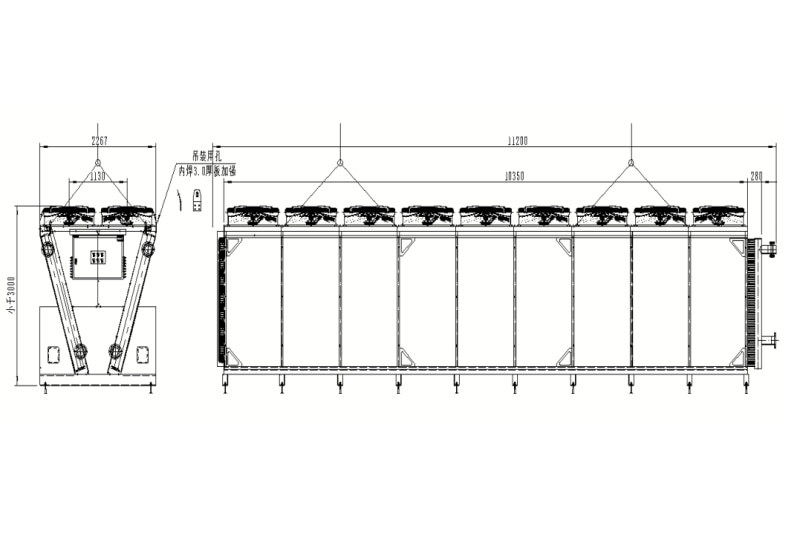 Alt text: A technical diagram illustrating a hybrid cooling system where liquid cooling removes heat from servers, and a dry cooler rejects that heat to the outside air.
Hybrid Dry Coolers for Diverse Workloads and Future-Proofing
The reality of most data centers, especially large colocation facilities, is that they house a wide variety of workloads. Not every rack is running a power-hungry AI application; many are used for less intensive tasks like storage or standard enterprise computing. For these lower-density racks, traditional air cooling may be perfectly adequate and more cost-effective.
A hybrid cooling strategy is the ideal solution for these mixed-use environments. It allows operators to:
- Deploy Cooling Strategically: Use high-performance liquid cooling for the few rows of high-density AI racks while continuing to use existing, cost-effective air cooling for the rest of the facility.
- Adapt and Scale Over Time: A hybrid approach provides flexibility and future-proofs the facility. As workloads evolve and more high-density racks are deployed, the cooling infrastructure can be scaled up incrementally. Operators can gradually add more liquid cooling capacity without needing a complete, and costly, overhaul of the entire data center's cooling system.
- Maximize Efficiency and ROI: By matching the cooling solution to the specific need, data centers avoid over-engineering and overspending. This targeted approach ensures that energy and resources are used efficiently, improving the return on investment. Retrofitting an existing facility becomes more manageable, as a hybrid system can often be integrated with the existing infrastructure.
Hybrid cooling is not just a temporary bridge to a fully liquid-cooled future; for many, it is the future. It acknowledges the diverse and dynamic nature of data center operations, providing a practical, scalable, and cost-effective path to managing the intense thermal challenges of today while preparing for the demands of tomorrow.
Trend 4: Smart Integration and Advanced Materials in Dry Cooler Design
The evolution of dry coolers goes beyond just their basic function. To meet the demands for ever-greater efficiency and reliability, manufacturers are integrating sophisticated technologies and advanced materials into their designs. The modern dry cooler is an intelligent, optimized system that actively manages its performance to conserve energy. This trend is characterized by two key areas of innovation: smart control systems powered by IoT and AI, and breakthroughs in the materials used for heat exchange.
Intelligent Control Systems for Dry Coolers
Gone are the days of simple on/off fan controls. Today's dry coolers are equipped with intelligent control systems that create a responsive and highly efficient cooling ecosystem. These systems use a network of sensors and advanced software to make real-time adjustments, ensuring that the unit provides the exact amount of cooling needed at any given moment, and no more.
Key features of these smart control systems include:
- Variable Speed Fans: Instead of running at a fixed, maximum speed, modern dry coolers use Electronically Commutated (EC) fans with variable-speed drives. The control system can modulate fan speed from 0 to 100%, precisely matching the airflow to the real-time heat load. During periods of lower demand or cooler ambient temperatures, the fans can slow down, leading to significant energy savings.
- IoT Sensor Integration: A network of Internet of Things (IoT) sensors is deployed throughout the cooling loop and the external environment. These sensors constantly monitor key parameters such as ambient temperature, humidity, coolant temperature, and IT load. This stream of real-time data is fed back to the central controller, providing a complete picture of the system's operating conditions.
- AI and Machine Learning: The most advanced systems leverage Artificial Intelligence (AI) and machine learning algorithms to analyze the data collected by the IoT sensors. The AI can identify patterns in workload and weather, allowing it to predict future cooling demands and proactively adjust system performance. For example, if the AI predicts a spike in IT load, it can begin to ramp up cooling just before it's needed, preventing temperature overshoots. This predictive capability optimizes both performance and energy consumption.
- Remote Monitoring and Diagnostics: Intelligent control systems enable remote monitoring and management. Facility operators can track performance, receive alerts for potential issues, and even diagnose problems from a centralized dashboard without having to be physically on-site. This predictive maintenance capability helps prevent unexpected downtime and reduces maintenance costs.
By dynamically adjusting to changing conditions, these intelligent systems ensure the dry cooler operates at peak efficiency, minimizes energy waste, and reduces operational costs.
Material Advancements for Enhanced Dry Cooler Performance
The physical construction of a dry cooler is just as important as its control system. Innovations in material science are leading to heat exchangers that are more efficient, durable, and cost-effective. The goal is to maximize heat transfer while ensuring a long service life, even in harsh environmental conditions.
One of the most significant advancements is the adoption of all-aluminum microchannel heat exchangers (MCHE). Originating in the automotive industry, this technology is now being applied to large-scale industrial coolers.
Compared to traditional copper tube and aluminum fin designs, MCHE technology offers several advantages:
- Enhanced Thermal Performance: MCHE coils consist of flat aluminum tubes with multiple small channels (or "microchannels") for the fluid to flow through. This design, combined with brazed fins, creates a much higher surface-area-to-volume ratio, resulting in significantly more efficient heat transfer. An MCHE can often achieve a given cooling capacity in a smaller footprint than a traditional coil.
- Reduced Weight and Refrigerant/Coolant Charge: Because MCHE coils are made entirely of aluminum, they are much lighter than their copper/aluminum counterparts. Their compact design also means they require a smaller volume of coolant to operate, reducing both initial and operational costs.
- Improved Corrosion Resistance: Galvanic corrosion, which can occur when two dissimilar metals like copper and aluminum are in contact in the presence of moisture, is a common problem with traditional coils. Since MCHEs are made from a single material (aluminum), this risk is eliminated. Many manufacturers also apply special epoxy or hydrophobic coatings to further protect the coils from environmental contaminants and corrosion.
- Lower Air-Side Pressure Drop: The thin profile of MCHE coils results in less resistance to airflow. This means the fans don't have to work as hard to push air through the heat exchanger, leading to lower fan power consumption and reduced noise levels.
Alongside MCHE, researchers are constantly exploring novel materials like nickel superalloys, advanced composites, and even copper-carbon nanotube (CNT) materials to push the boundaries of heat transfer efficiency and durability for future applications. These material innovations are crucial for creating the next generation of high-performance, long-lasting dry coolers.
Trend 5: Modularity, Scalability, and Reliability in Dry Cooler Implementations
In the fast-paced world of data centers, where demand can fluctuate and growth is often rapid, the physical infrastructure must be as agile as the digital services it supports. The final trend focuses on the design and implementation philosophy of modern dry coolers, emphasizing modularity for easy scaling, compact designs for space efficiency, and robust construction for unwavering reliability. These principles are essential for ensuring that a data center's cooling infrastructure can grow with its IT needs while guaranteeing the continuous operation required for mission-critical applications.
Modular and Compact Dry Cooler Designs
The days of installing a single, monolithic cooling system designed for a facility's maximum theoretical future load are over. This approach leads to massive upfront capital expenditure and years of inefficient operation as the oversized system runs at a fraction of its capacity. Instead, the industry has embraced a modular, "pay-as-you-grow" approach.
Modularity in dry coolers means the systems are built as standardized, self-contained units or modules. These modules can be added incrementally to the cooling infrastructure as the data center's heat load increases. This approach offers several key advantages:
- Scalability: A data center can start with the number of modules required for its day-one load and simply "plug in" additional modules as it expands. This aligns capital spending directly with revenue-generating capacity and ensures the cooling system is always right-sized for the current load, maximizing efficiency.
- Cost-Effectiveness: The modular design significantly reduces initial investment. There's no need to spend money on capacity that won't be used for years. Furthermore, standardized modules are often faster and cheaper to manufacture and install.
- Flexibility: Modular systems offer greater flexibility in design and layout. They can be arranged in various configurations (e.g., in series or parallel) to meet specific site requirements and performance goals.
Compact designs are another critical innovation. As data centers try to maximize the floor space dedicated to IT equipment, the footprint of supporting infrastructure like cooling systems becomes a major consideration. Manufacturers are developing dry coolers with greater capacity in smaller packages. V-shaped coil configurations, for example, increase the heat exchange surface area within a given footprint. This space efficiency is particularly beneficial for urban data centers or facilities with limited available land.
Alt text: An installation of several modular dry cooler units, showcasing the scalability of the system.
Ensuring Continuous Operation with Reliable Dry Cooler Systems
For a data center, downtime is not an option. A cooling failure can quickly lead to widespread equipment shutdowns and catastrophic data loss. Consequently, reliability and redundancy are non-negotiable requirements for any cooling system. Modern dry coolers are engineered from the ground up to ensure continuous, uninterrupted operation.
Reliability is built into the core design of dry coolers. Compared to cooling towers, they have a simpler construction with fewer moving parts and no complex water treatment systems. This inherent simplicity reduces the number of potential failure points and leads to a longer service life with less maintenance. Regular preventative maintenance, such as cleaning heat exchanger surfaces and inspecting fans, is typically straightforward and ensures the system maintains optimal performance.
Redundancy is the strategy of duplicating critical components to ensure the system can continue to operate even if a component fails. In data center cooling, this is most commonly achieved through an N+1 configuration.
- What is N+1? "N" represents the number of cooling units required to handle the facility's total heat load. The "+1" signifies one additional, identical unit that is installed as a backup.
- How it Works: If a data center needs four dry cooler modules to handle its load (N=4), an N+1 design would involve installing five modules. If one of the primary units fails or needs to be taken offline for maintenance, the spare "+1" unit automatically takes over, ensuring the total cooling capacity is never compromised.
- Benefits: This strategy provides a high degree of availability at a more affordable cost than a fully mirrored 2N system (a complete duplicate of the entire system). It allows for concurrent maintenance and protects against unexpected equipment failures, which is essential for meeting the uptime requirements of modern data centers.
Many modular dry cooler systems are designed with N+1 redundancy built-in, often including redundant pumps and controls within each module for an even higher level of resilience. This focus on modularity, scalability, and robust, redundant design makes dry cooler technology a reliable and future-proof choice for mission-critical data center environments.
Frequently Asked Questions (FAQ)
1. What is the fundamental difference between a dry cooler and a cooling tower? The primary difference lies in how they use water. A dry cooler is a closed-loop system that uses ambient air to cool a fluid (like a water-glycol mix) inside sealed coils; no water is evaporated in the process. A cooling tower is an open-loop system that brings water into direct contact with air, using evaporation as the main method of heat rejection. This means cooling towers consume large amounts of water and require extensive water treatment, whereas dry coolers conserve water and have simpler maintenance requirements.
2. Are dry coolers effective in hot climates? The efficiency of a standard dry cooler is directly tied to the ambient air temperature. In very hot climates, their ability to cool the process fluid is reduced. However, this is often addressed with hybrid adiabatic coolers. These systems function as dry coolers most of the time but can spray a fine mist of water onto pre-cooling pads during peak heat. This evaporates and pre-cools the air before it reaches the main coil, significantly boosting cooling performance while still using up to 95% less water than a traditional cooling tower.
3. What is Power Usage Effectiveness (PUE) and how do dry coolers help improve it? PUE is the ratio of a data center's total energy consumption to the energy used by its IT equipment (PUE = Total Facility Energy / IT Equipment Energy). A lower PUE indicates a more efficient facility. Dry coolers improve PUE by reducing the energy needed for cooling. They are inherently more energy-efficient than compressor-based chillers and enable "free cooling" during cooler weather, where chillers can be shut off entirely, drastically cutting electricity consumption.
4. How much maintenance do dry coolers require? Dry coolers generally require significantly less maintenance than cooling towers. Since they are closed-loop systems, they are not prone to the scaling, corrosion, and biological growth that require constant water treatment in open-loop towers. Maintenance typically consists of regular inspections and cleaning of the heat exchanger fins to remove dust and debris, as well as checking the fans and motors for proper operation.
5. Can dry coolers be used for direct liquid cooling systems? Absolutely. Dry coolers are a critical component of many direct liquid cooling (DLC) and immersion cooling solutions. While liquid cooling is used to absorb the intense heat directly from the chips or servers, that heat must still be rejected from the building. The heated liquid from the IT equipment is often passed through a heat exchanger to a facility water loop, which is then pumped to external dry coolers that dissipate the heat into the atmosphere.
6. What does N+1 redundancy mean for a dry cooler system? N+1 is a common reliability strategy. "N" stands for the number of dry cooler units required to handle the data center's full heat load. The "+1" means an additional, identical unit is installed as a backup. If any one of the primary "N" units fails or is taken offline for maintenance, the "+1" unit automatically takes its place, ensuring there is no disruption to the cooling capacity and guaranteeing continuous operation for the data center.
Conclusion
Dry cooler technology is rapidly evolving, driven by the critical need for sustainable, efficient, and reliable cooling in data centers. The definite shift away from inefficient and water-intensive legacy systems reflects a broader industry commitment to environmental responsibility and long-term cost optimization. As computing demands continue to intensify, the thermal management strategies of yesterday are no longer sufficient for the challenges of tomorrow.
As we’ve explored, the five key trends in dry cooler technology—water conservation, energy efficiency, hybrid integration, smart design, and modular reliability—are not just theoretical concepts but are actively being implemented and refined across the globe. These advancements are paving the way for data centers that are not only more powerful but also more eco-conscious and economically viable. By embracing these trends, data center operators can ensure their facilities remain competitive and resilient, truly leading the charge in optimized, future-proof cooling.
We encourage you to share this article with your network and join the conversation on how we can continue to innovate for a more sustainable digital future. The path forward is cool, dry, and intelligent.