Importing Custom Dry Coolers from China: Shipping, Logistics, and Incoterms Guide
- Share
- publisher
- Boyi Cooling
- Issue Time
- Aug 21,2026
Summary
A practical guide to importing custom dry coolers from China. It walks through Incoterm selection (FOB, CIF, DDP), export-grade packaging standards, sea, air and land shipping modes, customs documentation, realistic lead time planning, and 30+ country delivery experience from Boyi Cooling, including a step-by-step logistics checklist for first-time and repeat importers.
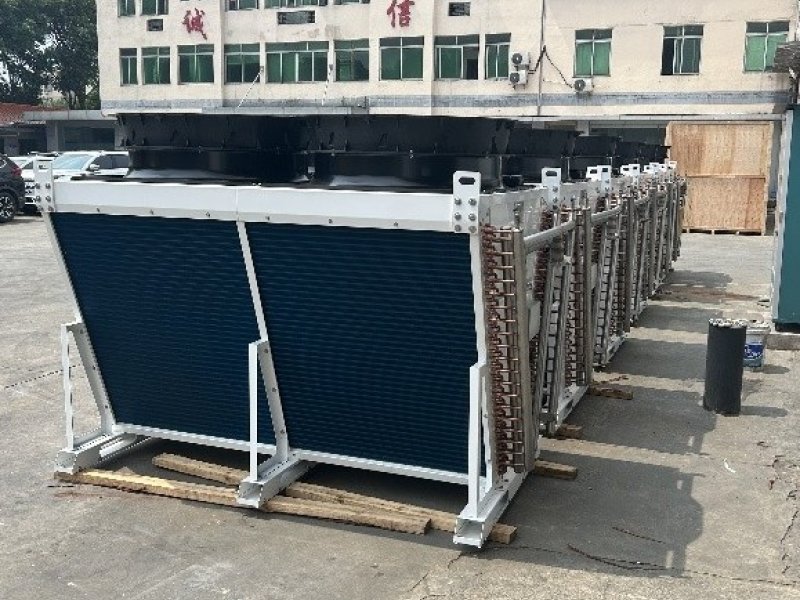
Importing Custom Dry Coolers from China: Shipping, Logistics, and Incoterms Guide
For thermal management buyers in Europe, the Middle East, North America, and Southeast Asia, importing custom dry coolers from China has shifted from a niche tactic to a mainstream supply chain strategy. Over the past decade, Chinese manufacturers have moved up the value curve, investing in engineering depth, automated welding, leak-testing infrastructure, and internationally recognized quality systems. Today, the right Chinese partner delivers dry coolers that match European build quality at a fraction of the landed cost.
This guide is built around the practical questions that real buyers ask when sourcing custom dry coolers from Boyi Cooling. It walks through why China is a credible source, how to choose the right Incoterm, what export packaging should look like, how the major shipping modes compare, what documentation you need at customs, how to plan realistic lead times, and where buyers most often go wrong.
Why Global Buyers Source Dry Coolers from China
The decision to import industrial dry coolers from China is rarely a question of cost alone. Most buyers who move from local or regional suppliers to Chinese factories respond to a combination of capability, capacity, and total cost considerations that local markets cannot match.
The Capability and Capacity Gap
Building a multi-megawatt dry cooler requires specialized welding capability, leak-testing infrastructure, fin-stamping lines, and a metallurgical understanding of how copper, stainless steel, and aluminum behave under continuous thermal cycling. Outside a handful of European and North American manufacturers, few local suppliers have the engineering depth and capital equipment to produce large V-type dry coolers or stainless steel tube evaporative cooling coils at the 1 MW to 3 MW scale. Chinese manufacturers like Boyi Cooling have invested heavily in this capability, with batch capacity measured in tens of units per month and the ability to surge production when project timelines compress.
The Total Cost Calculation
Even when local quality is comparable, the unit price difference is hard to ignore. A 2.5 MW stainless steel V-type dry cooler from a Western manufacturer can carry a list price two to three times higher than the same unit produced in China. When the import is structured correctly, the landed cost including freight, customs, and last-mile delivery is still 30% to 50% below the domestic alternative.
The Risk Profile Is Now Understood
Independent verification through third-party inspections, published references, ISO 9001 certification, documented case studies, and warranty structures backed by international payment terms have transformed Chinese sourcing from a leap of faith into a managed risk. The remaining risks, including logistics, customs, and Incoterms selection, are exactly what this guide addresses.
Incoterms Explained: FOB vs. CIF vs. DDP
Incoterms define the point at which responsibility, risk, and cost transfer from the seller to the buyer. The wrong Incoterm can add weeks to the project timeline and thousands of dollars in unexpected costs. Here are the three terms most commonly used for heat exchanger shipments and how to choose between them.
FOB (Free on Board)
The seller delivers the goods on board the vessel at the named port of shipment and clears export customs. From that moment on, the buyer assumes all costs and risks, including ocean freight, marine insurance, destination customs clearance, duties, and last-mile delivery. FOB is the natural choice for buyers who already work with a freight forwarder or who want maximum control over carrier selection. It is the lowest-cost Incoterm at the supplier level but requires confidence in your forwarder.
CIF (Cost, Insurance, and Freight)
The seller pays for ocean freight and marine insurance to the named destination port, but risk still transfers at the loading port. The buyer handles destination customs clearance, duties, taxes, and inland delivery. CIF simplifies life for buyers who want the seller to negotiate ocean rates, especially smaller projects where the seller can consolidate cargo and secure better rates. CIF is often the right Incoterm for first-time importers with a customs broker but no established freight relationship.
DDP (Delivered Duty Paid)
The seller assumes full responsibility for delivery to a named place in the buyer's country, including all transport, insurance, customs clearance, duties, and taxes. DDP is the most buyer-friendly Incoterm because the project cost is effectively the landed cost, with no surprise fees at destination. It is also the highest-cost Incoterm for the seller, who builds the customs and duty expense into the unit price. DDP is ideal for buyers with limited import experience or for projects where simplicity matters more than the lowest price. Boyi Cooling routinely arranges DDP deliveries to the European Union, the GCC, and parts of Southeast Asia.
How to Choose the Right Incoterm for Your Project
The right Incoterm depends on three variables: your project's annual import volume, your existing logistics infrastructure, and the strategic value of simplicity. Buyers importing more than ten containers per year usually benefit from FOB pricing plus a dedicated freight relationship, because the per-shipment savings outweigh the operational complexity. Buyers importing one to five containers per year typically prefer CIF or DDP for operational simplicity. Buyers running their first import should start with DDP to eliminate variables and learn the customs environment before taking on direct responsibility. Submit an inquiry to Boyi Cooling for an Incoterm-aligned quotation.
Packaging Standards for Export-Grade Heat Exchanger Shipments
Custom dry coolers are heavy, dimensionally complex, and prone to surface damage during ocean transit. Export-grade packaging is not optional for international shipments of finished heat exchangers; it is the price of admission.
Export Crating and ISPM 15 Compliance
For international shipments, wooden export crates must comply with ISPM 15, which requires heat treatment or fumigation of all wooden packaging materials and a visible compliance mark on the crate. Skipping this can lead to containers being refused entry at destination, with the buyer absorbing demurrage and re-export costs. Boyi Cooling uses ISPM 15-marked plywood and pine crating for every international shipment.
Internal Mounting and Moisture Protection
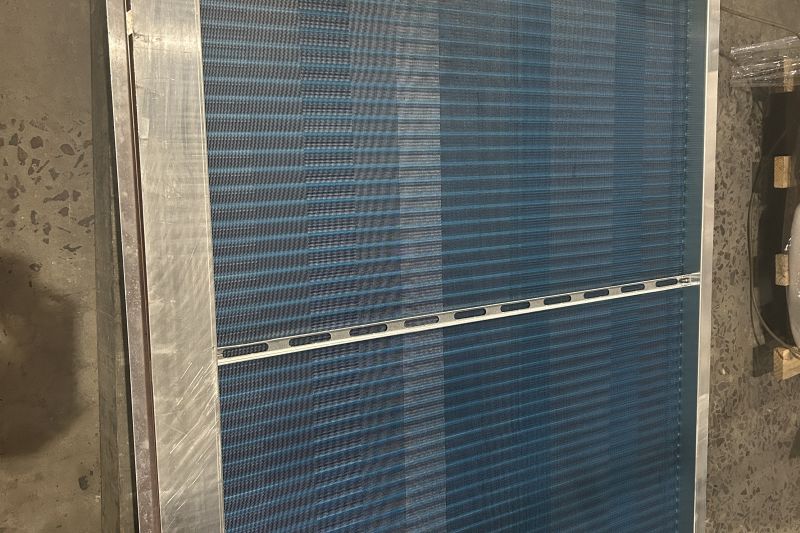
Inside the crate, the heat exchanger is bolted to a wooden skid or steel base frame that distributes the unit's weight evenly. Coil assemblies are braced against the crate walls using wooden blocks or high-density foam to prevent lateral movement during ocean transit. For long-voyage shipments to humid climates, the unit is wrapped in VCI film with silica gel desiccant packs calculated by cubic volume and voyage duration.
Shock and Tilt Indicators
For high-value or fragile shipments, shock indicators and tilt indicators are mounted to the outside of the crate to record any impact or excessive tilt during transit. These devices provide clear evidence for any freight claim. Boyi Cooling includes shock-watch labels on all export shipments exceeding 1 MW of cooling capacity.
Shipping Methods: Sea, Air, and Land Compared
Most custom dry coolers move from China to international destinations by ocean freight, but air and land options have their place for specific scenarios. Understanding the trade-offs allows buyers to align logistics choice with project urgency, cost target, and equipment size.
Sea Freight: The Default for Heavy Equipment
Ocean freight is the standard mode for finished dry coolers and finned coil assemblies, especially units in the 500 kW to 5 MW range. FCL shipments of 20-foot or 40-foot containers are the most common format, with smaller or oversized units shipped as breakbulk or flat rack cargo. Transit times vary by destination: 14 to 18 days to Northern Europe, 18 to 25 days to the U.S. East Coast, 25 to 35 days to the U.S. West Coast, and 12 to 20 days to the Middle East. Sea freight cost per cubic meter is by far the lowest of the three modes.
Air Freight: Urgent Spares and Replacement Coils
Air freight is rarely used for full dry cooler units because the volumetric weight makes the cost prohibitive. However, it has a clear role for urgent spare parts, replacement coils, control panels, and small sub-assemblies that, if delayed, would shut down a customer operation. Air freight transit is two to five days, with rates typically five to ten times the ocean rate per kilogram. For critical spares, the cost premium is justified by avoiding downtime losses.
Land Transport: Asia Regional Delivery
For projects within Asia, land transport via truck or rail is a fast and cost-effective alternative to sea freight. Cross-border trucking from China to Southeast Asia, Central Asia, Russia, and Mongolia is well established, with transit times ranging from five to fifteen days. Rail freight via the China Railway Express network connects China to Europe overland in 15 to 20 days, often used for medium-priority shipments where sea freight is too slow.
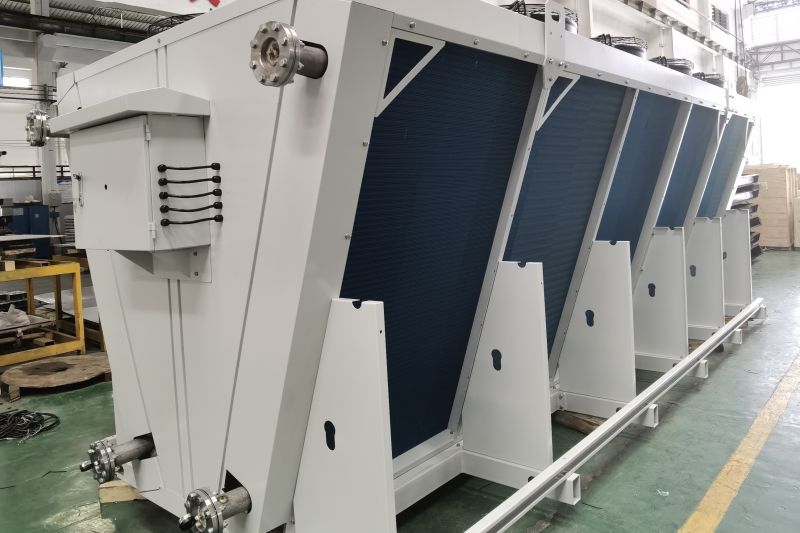
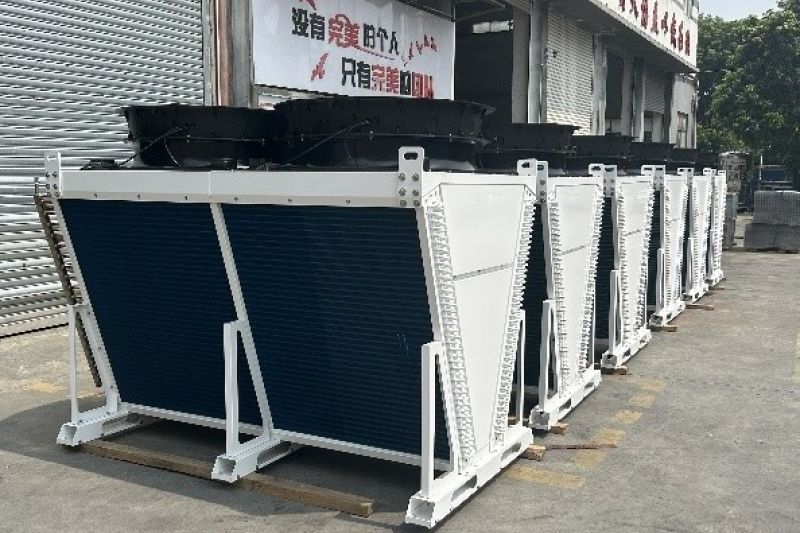
Customs and Documentation: The Paperwork That Gets Your Heat Exchanger Through the Border
Customs clearance is where most first-time importers underestimate the workload. Even with the right Incoterm in place, the documentation set must be complete, accurate, and properly declared for the destination country. Missing documents, misclassified HS codes, or a packing list that disagrees with the commercial invoice are the three most common reasons shipments are held at customs.
Commercial Invoice and Packing List
The commercial invoice is the primary document for customs valuation. It must include the seller's and buyer's full legal names and addresses, the date of shipment, a description of each line item, unit prices, currency, total invoice value, terms of sale, country of origin, and the buyer's reference number. The packing list itemizes every package with contents, dimensions, gross and net weight, and total volume. It must reconcile with the commercial invoice line by line: discrepancies are one of the most common triggers for customs holds.
Certificate of Origin and HS Codes
The certificate of origin is issued by an authorized body in China and attests that the goods originate there, essential for claiming preferential duty rates under free trade agreements and for GCC conformity assessment. Heat exchangers typically fall under HS 8419 (machinery for treatment of materials by a change of temperature) or HS 8418 (refrigeration and heat pump equipment) depending on application. The HS code determines the duty rate at destination, and an incorrect code can result in overpayment, underpayment with subsequent penalties, or shipment refusal. Confirming the HS code with your customs broker before shipment is essential.
Material and Test Certificates
For buyers who require material traceability, certificates are issued for the raw materials used in production. Test certificates document pressure test results, leak test results, and thermal performance verification. These documents are increasingly requested under the EU Pressure Equipment Directive (PED) and the GCC conformity framework. Boyi Cooling includes material certificates and pressure test reports with every export shipment, signed and stamped by the responsible quality engineer.
Lead Time Planning: Realistic Timelines from PO to Site Delivery
The single most common cause of project delay on imported dry cooler orders is lead time miscalculation. Buyers often assume the manufacturer's quoted production lead time is the total lead time, overlooking the additional weeks required for export packing, ocean transit, customs clearance, and inland delivery. Building a realistic timeline from the start is the most reliable way to avoid compressed commissioning dates.
Anatomy of a Realistic Lead Time
The total lead time from purchase order to on-site delivery for a custom dry cooler order typically breaks down as follows: design confirmation, 1 to 2 weeks; raw material procurement for non-standard configurations, 2 to 4 weeks; production and assembly, 3 to 5 weeks; factory testing and pre-shipment inspection, 3 to 7 days; export packing and documentation, 3 to 5 days; ocean transit to destination port, 14 to 35 days depending on route; destination customs clearance, 3 to 10 days depending on country; and inland delivery from port to site, 1 to 7 days. Summing these blocks yields a typical total of 8 to 14 weeks for sea-freight shipments from order release to site delivery, with 6 to 10 weeks if air freight is used and materials are in stock.
How to Plan Buffer Correctly
The right buffer depends on the destination country and the buyer's experience with customs. For first-time shipments to a new country, add at least two weeks of buffer beyond the freight forwarder's estimate, because unexpected document requests, customs holds, or local holiday slowdowns are common. For repeat shipments to the same destination, add one week. The buffer is the only mechanism that protects the project timeline from variables the manufacturer cannot control.
Case Studies: Boyi's Global Delivery Track Record
A claim of global delivery is hollow without specifics. Boyi Cooling has been exporting custom heat exchangers and dry coolers since the early 2000s, with a current delivery footprint spanning more than 30 countries across Europe, the Middle East, Southeast Asia, Africa, and the Americas.
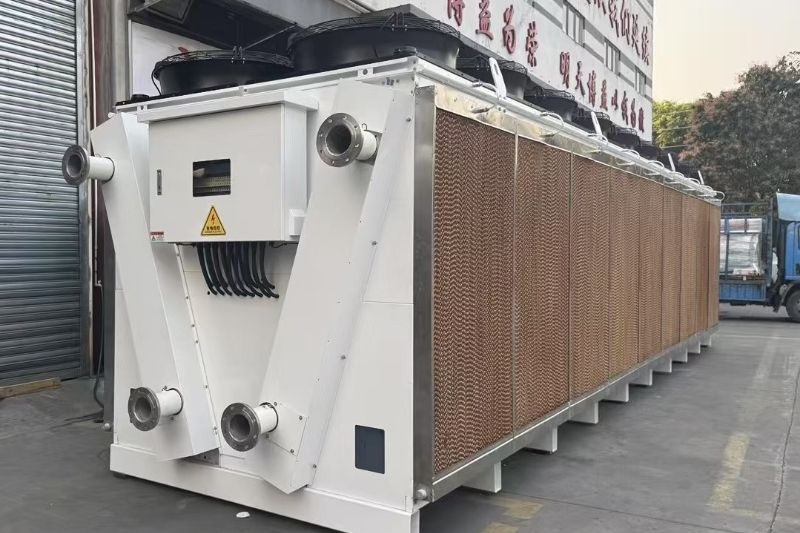
Case 1: Hyperscale Data Center Cluster in Dubai
A hyperscale data center developer in Dubai needed dry coolers rated for 45 degrees Celsius ambient with hybrid adiabatic pre-cooling. Boyi designed a hybrid V-type dry cooler with stainless steel tubes, copper fins, EC fans, and an integrated wet-pad adiabatic pre-cooling section. The system delivered nameplate capacity across the full Dubai annual temperature range while keeping water consumption 60% below the all-adjabatic baseline. The shipment was packaged in export-grade ISPM 15 crates, shipped CIF Jebel Ali, and cleared under the GCC conformity program.
Case 2: Greenhouse Climate Control in the Netherlands
A leading Dutch agricultural group needed heating and cooling coils for climate-controlled greenhouses. Boyi produced a custom 1-row heater and 2-row cooler coil with stainless steel frames, copper tubes, and aluminum fins, with each coil individually pressure tested before shipment. Units were packed in plywood crates and shipped FOB Rotterdam. The project is in its third repeat phase.
Case 3: Mining Process Cooling in the Atacama Region
A copper mining operation in the Chilean Atacama desert needed a high-altitude dry cooler rated for 4,000 meters elevation, ambient temperatures above 30 degrees Celsius, and dust-heavy atmospheric conditions. Boyi designed a copper-tube V-type dry cooler with IP55-rated EC motors, enhanced fin geometry for high-altitude airflow compensation, and easy-clean fin spacing. Units were manufactured, factory tested, and shipped DDP to the mine site, including customs clearance and inland trucking across the Andes.
Common Pitfalls: Mistakes That Derail Heat Exchanger Imports
Even experienced procurement managers stumble on heat exchanger imports because the equipment is heavy, dimensionally complex, and not standardized. The following issues recur most often and how to defuse each one.
Pitfall 1: Treating the Container Like a Standard Shipment
Dry coolers rarely fit comfortably inside a standard shipping container because coil dimensions exceed the container's internal width once braced for export. Buyers who budget for a 40-foot high-cube container often discover the actual shipment requires a flat rack or breakbulk booking, with different freight rates and documentation. Always confirm unit dimensions, packed dimensions, and required container type with the manufacturer before agreeing on freight.
Pitfall 2: Underestimating Last-Mile Delivery
The cost of moving a 5-tonne V-type dry cooler from the destination port to the project site is often larger than the ocean freight itself. Last-mile delivery requires specialized heavy-haul trucking, route surveys for bridges and overhead lines, crane access at the delivery point, and sometimes temporary road permits for oversize loads. Buyers in remote mining regions, island sites, or restricted urban environments frequently discover that last-mile costs and timelines have been underestimated by a factor of two.
Pitfall 3: Failing to Confirm Technical Fit Before Shipment
One of the most expensive mistakes is discovering at destination that the unit does not match the installation specification. Pipe connection sizes, electrical voltage, control signal types, or mounting dimensions can vary by destination market. Pre-shipment inspections, factory acceptance testing, and signed first-article approval prevent post-shipment discovery.
Pitfall 4: Ignoring Spare Parts Planning
Importing a custom dry cooler without considering spare parts becomes painful within 18 to 36 months as fan motors, contactors, and gaskets need replacement. Identify critical spare parts for the first five years, source them with the main shipment, and confirm that spare part supply will remain available for the foreseeable lifetime of the equipment.
Pitfall 5: Misclassifying the Goods at Customs
Misclassifying heat exchangers under the wrong HS code is one of the most common causes of duty disputes and shipment holds. The default HS code for industrial heat exchangers is 8419.89, but specific applications may use different codes with very different duty rates. Confirm the HS code with your customs broker before shipment and verify that the manufacturer's documentation aligns with the declared classification.
Logistics Checklist: Step-by-Step Import Preparation
Use the following checklist to organize your import project from initial supplier engagement through on-site commissioning. Each step includes the typical actor responsible.
Step 1: Confirm Technical Specification
Document the heat rejection requirement, ambient conditions, fluid type, materials of construction, capacity range, electrical specification, and any regulatory requirements. Lock the specification with the manufacturer in writing before requesting a quotation.
Step 2: Select the Incoterm
Decide between FOB, CIF, and DDP based on your logistics capability and risk tolerance. For first-time imports, default to DDP and use the experience to evaluate future terms.
Step 3: Engage a Customs Broker
Identify a customs broker in the destination country with experience in industrial equipment. Provide them with the technical specification, expected HS code, and shipment timeline so they can prepare documentation, duty estimates, and clearance planning.
Step 4: Confirm Packing and Documentation
Request the manufacturer's detailed packing specification, including crate dimensions, ISPM 15 compliance, moisture protection, and shock indicators. Confirm the documentation set includes commercial invoice, packing list, certificate of origin, and test reports.
Step 5: Conduct Pre-Shipment Inspection
Commission a third-party pre-shipment inspection (SGS, Bureau Veritas, or TUV) to verify dimensional conformity, finish quality, and packaging integrity before the goods leave the factory. For high-value orders, witness testing at the factory in person or via live video link.
Step 6: Clear Customs and Arrange Inland Delivery
Once the vessel arrives, the customs broker files the import declaration, pays duties, and obtains release of the goods. Arrange heavy-haul trucking from port to site, including any special permits, crane access, or route surveys needed for oversize loads.
Step 7: Receive, Inspect, and Commission
On arrival at site, inspect each crate for visible damage, check shock indicators, and verify the contents against the packing list. Open and visually inspect the heat exchanger, then commission the unit following the manufacturer's startup procedure. Document any issues for warranty claims and confirm operational performance before signing off on delivery.
Conclusion: Turning Import Logistics Into a Competitive Advantage
Importing custom dry coolers from China is no longer a cost-saving gamble; it is a mature supply chain strategy that delivers capability, capacity, and total cost advantages when executed correctly. The keys to consistent success are choosing the right Incoterm, demanding export-grade packaging, planning realistic lead times, getting the documentation right, and learning from each shipment. Boyi Cooling has supported this journey for buyers across more than 30 countries, providing engineering depth and end-to-end export services that turn a complex international purchase into a straightforward project.
If you are evaluating Boyi Cooling for your next dry cooler or industrial heat exchanger project, the best starting point is a conversation about your application's specification, your target destination's regulatory environment, and the Incoterm that fits your operational model. Reach out through the contact page or submit an inquiry with your technical requirements, and the Boyi Cooling team will prepare a project proposal that aligns engineering capability with logistics execution from factory to site.