Hybrid Dry Cooling Systems: Combining Air and Adiabatic Cooling for Peak Efficiency
- Share
- publisher
- Boyi Cooling
- Issue Time
- Sep 18,2026
Summary
Hybrid dry cooling systems combine traditional air cooling with adiabatic pre-cooling to deliver 30-50% higher efficiency in hot climates. This guide from Boyi Cooling explains wet pad technology, intelligent mode switching, and real case studies from Dubai and Kazakhstan. We compare water usage, examine design considerations, and provide a climate-based ROI analysis to help facility managers evaluate hybrid solutions for data centers and industrial applications.
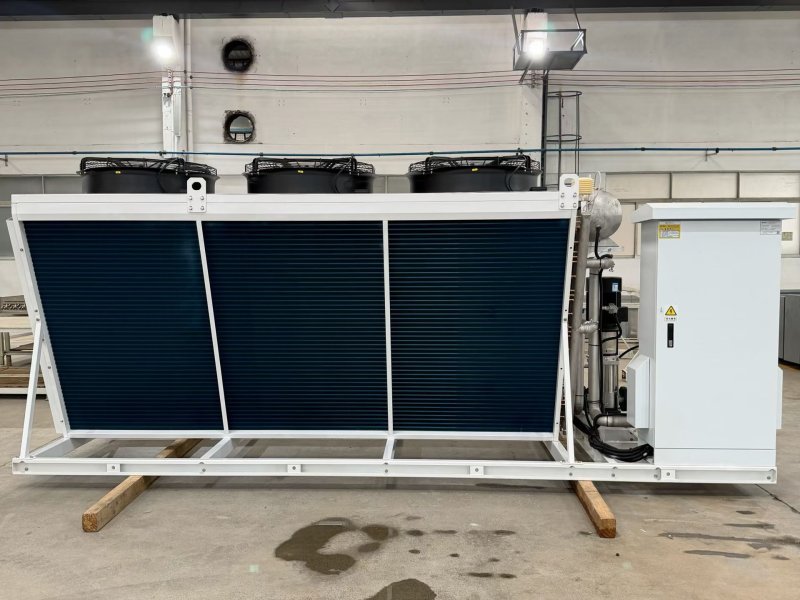
As data centers and industrial facilities push for higher efficiency and lower operating costs, a new class of cooling technology is gaining momentum. Hybrid dry cooling systems combine the water-saving benefits of traditional dry coolers with the enhanced performance of adiabatic pre-cooling, delivering peak efficiency across a wider range of ambient conditions. At Boyi Cooling, we have spent over two decades engineering thermal management solutions, and hybrid configurations represent one of the most significant advancements in our product portfolio.
This article explores how hybrid dry cooling works, why it outperforms conventional dry-only systems in hot climates, and what facility managers should consider when evaluating a hybrid solution for their operations.
What Is Adiabatic Cooling and How Does It Work?
Adiabatic cooling is a thermodynamic process that lowers air temperature through the evaporation of water, without transferring heat to the process fluid itself. In a hybrid dry cooler, this principle is applied to the inlet air stream before it passes across the finned coil surface. By pre-cooling the ambient air by 5 to 15 degrees Celsius, the system effectively reduces the entering air temperature and dramatically improves the unit's heat rejection capacity.
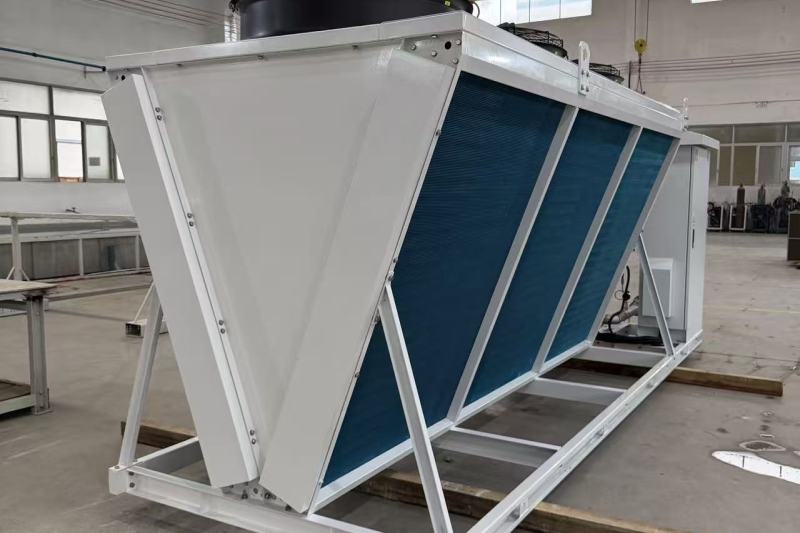
Adiabatic pre-cooling lowers inlet air temperature by 5-15 degrees Celsius before it reaches the finned coil
There are two primary adiabatic technologies used in hybrid dry coolers today:
- Wet Pad Systems: Honeycomb-style cellulose or synthetic pads are kept continuously moist by a water distribution system. As air is drawn through the pads, water evaporates and cools the air stream. This method is highly efficient, with a saturation effectiveness of 80% to 95%, and uses minimal water because evaporation occurs only when the ambient temperature exceeds a set threshold.
- High-Pressure Mist Systems: Ultra-fine water droplets are injected into the inlet air plenum through stainless steel nozzles operating at 70 to 100 bar. The fine mist evaporates almost instantly, creating a flash-cooling effect. Mist systems offer rapid response times and can be modulated precisely, but they require higher water quality and more frequent nozzle maintenance.
Both approaches share the same fundamental advantage: they enable a dry cooler to maintain rated capacity even when ambient temperatures soar well above 35 degrees Celsius, conditions where conventional dry-only units begin to lose efficiency.
Hybrid System Operating Modes: Intelligent Automatic Switching
The defining feature of a hybrid dry cooler is its ability to operate in multiple modes and transition between them automatically based on real-time conditions. Modern hybrid units from Boyi Cooling are equipped with programmable logic controllers that monitor ambient dry-bulb and wet-bulb temperatures, process fluid temperature, and system load to determine the optimal operating mode.
Dry Mode
When ambient temperatures are moderate typically below 25 degrees Celsius the system operates as a conventional dry cooler. The adiabatic system remains inactive, consuming zero water. Fans run at variable speed based on thermal load, and the unit delivers full cooling capacity with maximum water savings.
Adiabatic Mode
When ambient temperatures exceed the dry-mode threshold, the controller activates the adiabatic subsystem. Water flows to the wet pads or mist nozzles, and inlet air is pre-cooled before reaching the coil. This mode enables the unit to maintain design capacity even at ambient temperatures of 40 to 45 degrees Celsius, while using 80% to 90% less water than a full evaporative cooling tower.
Automatic Switching
Advanced controllers with PID algorithms continuously evaluate operating conditions and switch between modes seamlessly. The transition is designed to be bumpless, with fan speed and water flow modulated gradually to prevent thermal shocks to the process fluid. Facility operators can set custom thresholds, schedules, and override modes through the built-in HMI or remote monitoring interface.
This intelligent mode management is what gives hybrid systems their operational flexibility. In temperate climates, a hybrid unit may operate in dry mode for eight to ten months of the year, only engaging adiabatic cooling during the peak summer weeks. In hot desert climates like the Middle East, adiabatic mode may be active for five to six months, but the system still delivers significant water savings compared to cooling tower alternatives.
Performance Comparison: Dry-Only vs. Hybrid Systems
The performance gap between dry-only and hybrid dry coolers becomes most pronounced under high ambient temperature conditions. To quantify this, let us examine a typical 1000-kilowatt heat rejection application operating at a 35-degree Celsius ambient dry-bulb temperature with 40% relative humidity.
| Parameter | Dry-Only System | Hybrid System | Improvement |
|---|---|---|---|
| Effective inlet air temperature | 35 degrees Celsius | 26 degrees Celsius | -9 degrees Celsius |
| Heat rejection capacity | 1000 kW | 1300 to 1500 kW | +30% to +50% |
| Fan power consumption | 100% baseline | 75% to 85% baseline | -15% to -25% |
| Annual water consumption | 0 liters | 5000 to 15000 liters | Minimal vs. tower |
| Footprint for same capacity | 100% baseline | 70% to 80% baseline | -20% to -30% |
| Peak ambient capability | Up to 40 degrees Celsius | Up to 50 degrees Celsius | +10 degrees Celsius |
The data reveals several compelling advantages. First, the effective inlet air temperature reduction of 9 degrees Celsius translates to a capacity increase of 30% to 50%, meaning a hybrid unit can reject significantly more heat from the same coil surface area. Second, because the fans do not need to run at maximum speed to compensate for high ambient temperatures, energy consumption actually decreases by 15% to 25% during adiabatic operation. Third, the smaller footprint requirement means hybrid systems can deliver equivalent capacity in space-constrained installations such as urban data centers or retrofit projects.
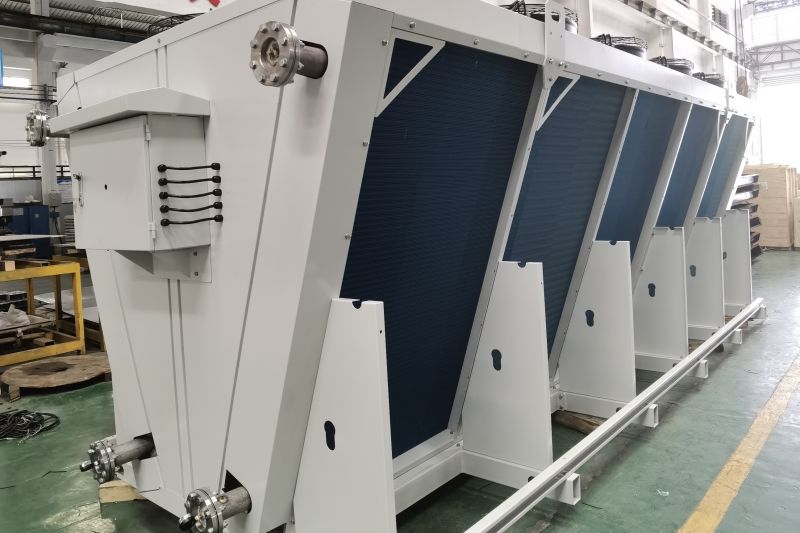
Hybrid V-type dry coolers deliver 30-50% higher capacity in high ambient temperatures while reducing energy consumption
It is worth noting that these performance gains are climate-dependent. In regions with high ambient temperatures but low relative humidity such as Dubai, Phoenix, or Riyadh the adiabatic effect is maximized because the wet-bulb depression is large. In humid tropical climates like Singapore or Mumbai, the wet-bulb depression is smaller, so the adiabatic cooling potential is reduced, though still meaningful. Boyi Cooling engineers perform site-specific climate analysis for every hybrid project to ensure accurate performance predictions.
Water Usage: Why Hybrid Systems Use 80-90% Less Water Than Cooling Towers
One of the most common objections to evaporative cooling is water consumption. A conventional cooling tower can consume 50000 to 200000 liters of water per megawatt of cooling capacity per year, depending on local evaporation rates and blowdown requirements. In water-scarce regions, this level of consumption is simply unsustainable.
Hybrid dry coolers address this concern directly. Because the adiabatic subsystem only pre-cools the inlet air rather than performing full evaporative heat rejection, water consumption is drastically lower. Typical annual water usage for a hybrid dry cooler ranges from 5000 to 15000 liters per megawatt a reduction of 80% to 90% compared to a cooling tower.
Water Conservation in Practice
A 2.5-megawatt data center in Dubai using conventional cooling towers would consume approximately 125000 liters of water annually. The same facility equipped with a hybrid dry cooler system would use roughly 12500 liters per year a savings of over 110000 liters while maintaining equivalent or superior cooling performance.
Furthermore, because hybrid systems operate in dry mode for the majority of the year in most climates, annual water consumption is often concentrated into just a few peak summer months. This seasonal usage pattern makes it easier for facilities to manage water budgets and comply with municipal water restrictions during drought periods.
Market Trend: Adiabatic Hybrid Units Are Among the Fastest-Growing Segments
The global market for adiabatic hybrid cooling systems is experiencing robust growth. Industry analysts project a compound annual growth rate of approximately 34% for hybrid dry cooler units over the next five years, driven by several converging factors:
- Data Center Expansion: The proliferation of AI and high-performance computing workloads is increasing heat densities in data centers, driving demand for cooling solutions that can handle peak loads in hot climates without excessive water use.
- Water Scarcity Regulations: Municipalities in California, Arizona, Australia, and the Middle East are increasingly restricting water use for cooling purposes, making hybrid systems an attractive compliance pathway.
- Energy Efficiency Mandates: EU Energy Efficiency Directive and similar regulations worldwide are pushing facility operators to adopt technologies that reduce both energy and water consumption.
- ESG Reporting Pressure: Investors and customers are demanding transparency on environmental metrics, and hybrid cooling offers a credible way to improve both Power Usage Effectiveness (PUE) and Water Usage Effectiveness (WUE) scores.
At Boyi Cooling, we have observed this trend directly. Over the past three years, inquiries for hybrid dry coolers with adiabatic pre-cooling have increased by more than 200%, with the strongest demand coming from data center operators in the Middle East, Southeast Asia, and the southwestern United States.
Boyi Cooling Hybrid Case Studies: Real-World Performance
With over 20 years of experience in thermal engineering and exports to more than 30 countries, Boyi Cooling has delivered hybrid dry cooling solutions across diverse climates and applications. Here are three representative case studies that demonstrate the versatility of our hybrid technology.
Case Study 1: 930KW V-Type Dry Cooler with Wet Curtain for Dubai Data Center
A Tier III data center in Dubai required a cooling solution capable of maintaining a 35-degree Celsius process fluid outlet temperature when ambient temperatures reached 48 degrees Celsius. Boyi Cooling supplied a customized 930-kilowatt V-type dry cooler with integrated wet curtain adiabatic pre-cooling. During peak summer conditions, the wet curtain reduced inlet air temperature by 12 degrees Celsius, enabling the unit to maintain full rated capacity. Annual water consumption was approximately 8000 liters less than 5% of what a cooling tower would have required.
Case Study 2: 667KW V-Type with Wet Pads for Adiabatic Air Cooling
An industrial processing facility in Saudi Arabia needed a compact cooling solution for a 667-kilowatt heat load. Space constraints ruled out a cooling tower, and the facility's limited water allocation made conventional evaporative cooling impractical. Boyi Cooling designed a V-type dry cooler with wet pad adiabatic enhancement. The unit operates in dry mode for nine months of the year, switching to adiabatic mode only during the four hottest summer months. Total annual water consumption is under 6000 liters.
Case Study 3: 2500KW with Wet Pads for Cryptocurrency Mining Farm
A large-scale cryptocurrency mining operation in Kazakhstan required 2.5 megawatts of heat rejection capacity across multiple units. The site experiences extreme temperature swings, from -30 degrees Celsius in winter to +42 degrees Celsius in summer. Boyi Cooling supplied a fleet of customized 2500-kilowatt stainless steel tube V-type dry coolers with wet pad adiabatic systems. The stainless steel construction provides corrosion resistance in the region's dusty continental climate, while the hybrid configuration ensures year-round capacity without excessive water use.
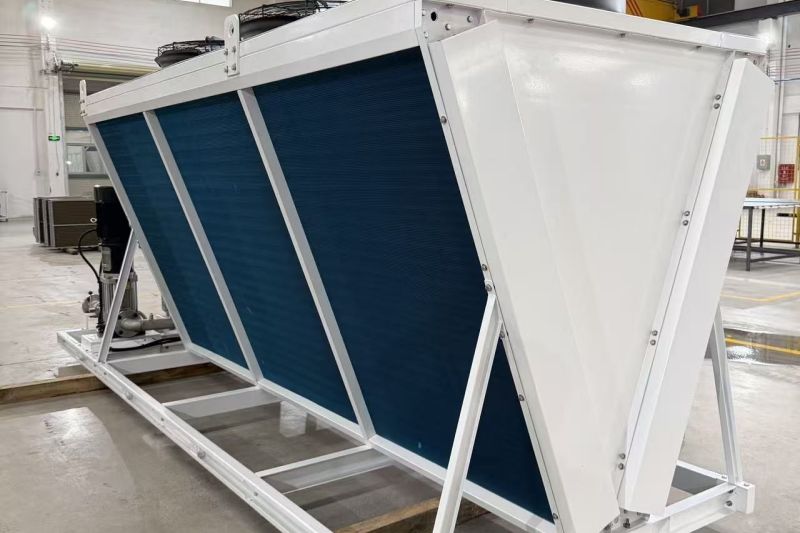
BOYI Customized 2500KW Stainless Steel Tube V-type Dry Cooler with Wet Pads for Mining Field
Engineered for extreme climates and high heat loads, this hybrid dry cooler combines stainless steel tube construction with integrated wet pad adiabatic pre-cooling. Ideal for mining farms, data centers, and industrial applications requiring reliable heat rejection across a wide ambient temperature range.
View Product DetailsDesign Considerations for Hybrid Dry Cooler Installations
While hybrid dry coolers offer compelling advantages, successful implementation requires attention to several design factors. Facility managers and specifying engineers should evaluate the following considerations during the planning phase.
Water Quality
The adiabatic subsystem requires a reliable water supply with acceptable quality. Wet pad systems are relatively tolerant of moderately hard water, but high mineral content can cause scaling on the pads over time. Mist systems are more sensitive and typically require softened or demineralized water to prevent nozzle clogging. Boyi Cooling offers integrated water treatment modules including filtration, softening, and reverse osmosis options as factory-installed accessories.
Pad Material Selection
Wet pad materials vary in cost, durability, and saturation efficiency. Cellulose pads offer the highest saturation efficiency (90% to 95%) but have a shorter lifespan of 3 to 5 years. Synthetic polymer pads provide moderate efficiency (75% to 85%) with a longer lifespan of 7 to 10 years and better resistance to biological growth. The optimal choice depends on local water quality, climate conditions, and maintenance capabilities.
Maintenance Requirements
Hybrid systems require slightly more maintenance than dry-only units due to the adiabatic subsystem. Typical maintenance tasks include:
- Monthly inspection of wet pads for scaling, algae, or debris buildup
- Quarterly cleaning of water distribution nozzles and troughs
- Annual replacement of water treatment consumables (filters, softener resin)
- Bi-annual inspection of the drain pan and overflow systems
These tasks add approximately 4 to 6 hours of maintenance labor per unit per year compared to a dry-only system. Boyi Cooling provides detailed maintenance schedules and spare parts kits with every hybrid installation.
Freeze Protection
In climates where ambient temperatures drop below freezing, the adiabatic water system must be designed for freeze protection. Boyi Cooling hybrid units include automatic drain-down systems that empty the water distribution lines and pad reservoir when temperatures approach 2 degrees Celsius. Optional glycol-based circulating systems are available for installations where year-round adiabatic operation is required in cold climates.
ROI Analysis: When Does the Hybrid Premium Pay Back?
Hybrid dry coolers typically carry a 15% to 25% capital cost premium over equivalent dry-only units, primarily due to the adiabatic subsystem components, water treatment equipment, and enhanced control systems. The payback period depends on climate, energy costs, water costs, and operating hours.
| Climate Profile | Annual Adiabatic Hours | Energy Savings | Water Cost Impact | Payback Period |
|---|---|---|---|---|
| Hot desert (Dubai, Phoenix) | 2000 to 3000 hours | $8000 to $15000/year | $500 to $2000/year | 1.5 to 2.5 years |
| Warm temperate (Madrid, Rome) | 800 to 1500 hours | $3000 to $7000/year | $300 to $1000/year | 2.5 to 4 years |
| Mild climate (London, Berlin) | 200 to 500 hours | $1000 to $3000/year | $100 to $500/year | 4 to 6 years |
| Tropical humid (Singapore, Mumbai) | 1500 to 2500 hours | $4000 to $9000/year | $400 to $1500/year | 2 to 3.5 years |
These estimates assume a 1000-kilowatt unit operating at 80% average load with an electricity cost of $0.12 per kilowatt-hour. Actual payback will vary based on local utility rates, capacity factor, and specific system design. Boyi Cooling offers a complimentary ROI analysis service for prospective hybrid installations, using climate data from the project location to generate accurate performance and payback projections.
In addition to direct operational savings, hybrid systems deliver indirect value through reduced infrastructure requirements. Because a hybrid unit can achieve higher capacity from a smaller footprint, facilities may save on structural support, piping, and installation labor. The elimination of cooling tower water treatment chemicals and the reduced risk of Legionella compliance issues also contribute to lower total cost of ownership.
Conclusion: Is Hybrid Dry Cooling Right for Your Facility?
Hybrid dry cooling systems represent a mature, proven technology that bridges the gap between water-free dry cooling and high-performance evaporative cooling. For facilities operating in hot climates, facing water scarcity constraints, or seeking to improve energy efficiency metrics, hybrid systems offer a compelling value proposition.
The key to a successful hybrid installation lies in thorough front-end analysis. Climate data, water availability, energy costs, and maintenance capabilities must all be evaluated to determine whether the hybrid premium will deliver acceptable returns. At Boyi Cooling, our engineering team brings over 20 years of heat exchanger design experience and a track record of successful installations in more than 30 countries to every project.
Whether you are designing a new data center, upgrading an existing industrial cooling system, or exploring heat exchanger options for a demanding application, we invite you to contact our team for a technical consultation. Our customized manufacturing capabilities allow us to tailor hybrid dry cooler configurations to your exact specifications, ensuring optimal performance and return on investment for your specific climate and operational requirements.