How to Evaluate and Select a Reliable Heat Exchanger Manufacturer
- Share
- publisher
- Boyi Cooling
- Issue Time
- Aug 14,2026
Summary
Learn how to evaluate and select a reliable heat exchanger manufacturer using six essential criteria: technical capability, manufacturing infrastructure, quality assurance, IP protection, global delivery, and after-sales support. Includes a supplier scorecard template.
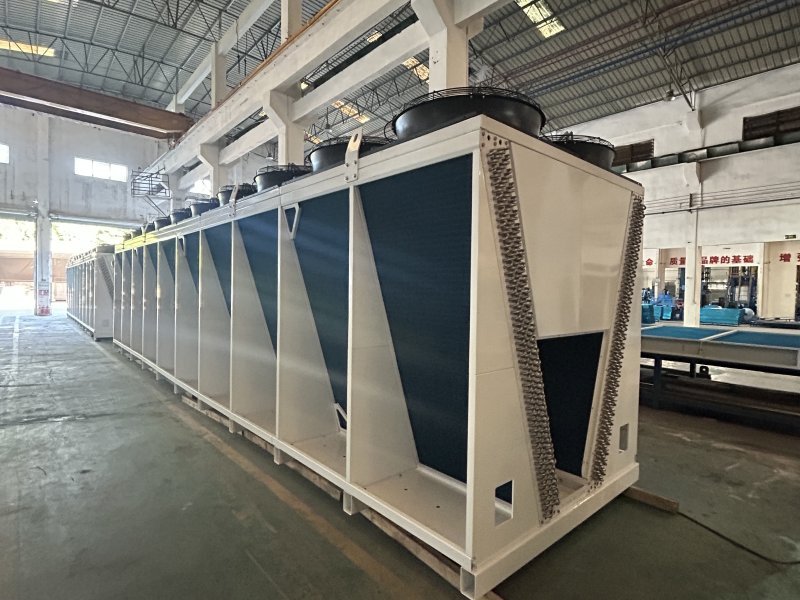
Selecting a heat exchanger manufacturer is one of the most consequential decisions in a cooling project. The right supplier delivers equipment that performs for decades; the wrong one creates hidden costs through quality defects, delivery delays, unclear warranties, or worse, intellectual-property exposure. For buyers sourcing industrial dry coolers, condensers, and coils, a structured evaluation process is the safest way to protect capital and operating budgets.
This guide presents six essential criteria for evaluating a heat exchanger manufacturer, a supplier scorecard template, and how Boyi Cooling aligns with each requirement through 20+ years of thermal engineering experience, customized manufacturing, and exports to 30+ countries.
Why Supplier Evaluation Matters
Heat exchangers are long-life assets. A data center dry cooler may run 8,760 hours per year for 15 years or more. Over that lifecycle, small differences in material quality, weld consistency, coil design, and fan selection compound into major differences in energy cost, maintenance burden, and downtime risk.
Common buyer regrets include hidden quality costs, specification mismatches, delivery delays, IP exposure, and after-sales gaps. A formal supplier evaluation prevents these problems before purchase orders are issued.
The lowest quoted price rarely predicts the lowest total cost. Evaluating a heat exchanger supplier across technical, operational, quality, legal, and service dimensions gives procurement teams a defensible, repeatable decision framework.
Criterion 1: Technical Capability and Engineering Depth
The first filter is whether the manufacturer can engineer a solution, not just assemble a product. Strong technical capability shows up in several ways:
Thermal Selection Software
Look for in-house or licensed selection tools that model coil performance across fluids, temperatures, flow rates, fin geometries, and ambient conditions.
2D and 3D Design Capability
The supplier should produce fabrication drawings, assembly models, and interference checks that integrate with your project documentation.
Patent and R&D Portfolio
Ask about proprietary coil designs, fan arrangements, noise-reduction features, or control logic that demonstrates ongoing innovation.
Application Experience
Prior work in data centers, mining, HVAC, refrigeration, and industrial process cooling indicates relevant knowledge transfer.
At Boyi Cooling, our engineering team uses advanced thermal-selection platforms and provides 2D/3D design support for every custom project. This depth allows us to optimize dry cooler capacity, footprint, and energy consumption before metal is cut.
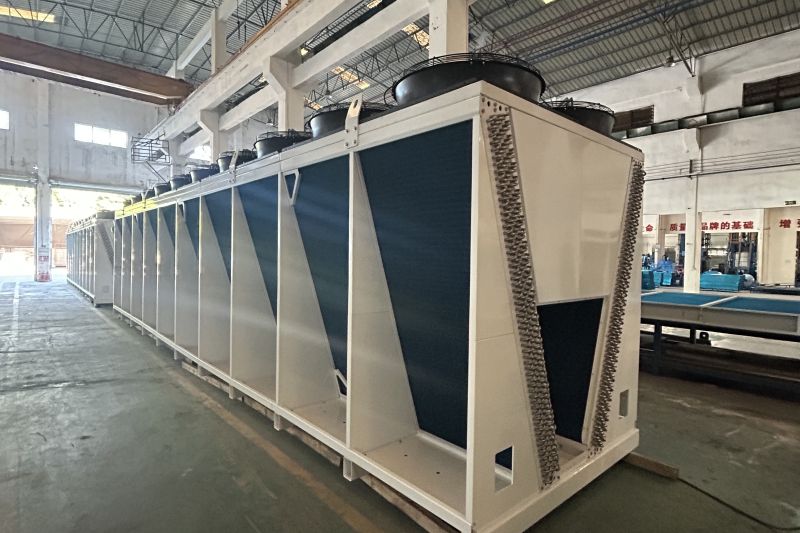
Thermal selection and 3D modeling are the foundation of a reliable custom heat exchanger program.
Criterion 2: Manufacturing Infrastructure
Engineering capability must be backed by production capacity and modern equipment. During a factory audit, focus on production floor scale, automation level, testing laboratory capabilities, material traceability, and cleanliness control.
Boyi Cooling operates a modern production base with automated fin lines, CNC tube processing, and dedicated testing stations. Every coil undergoes pressure testing and leak detection before shipment.
Criterion 3: Quality Assurance and Certifications
Quality is not a department; it is a system. A trustworthy heat exchanger supplier documents processes, trains operators, and maintains third-party certifications. Verify the following:
| Quality Element | What to Look For | Why It Matters |
|---|---|---|
| ISO 9001 | Current certificate from accredited body | Confirms documented quality-management system |
| Welding Qualification | Welder certificates, WPS/PQR records | Prevents tube-to-header and manifold failures |
| Leak Testing | Helium or nitrogen pressure-test protocols | Ensures coil integrity before shipment |
| Inspection Records | Dimensional, fin spacing, and visual reports | Provides evidence of conformance |
| Corrective Action | Root-cause analysis and CAPA process | Shows continuous improvement discipline |
Boyi Cooling maintains ISO 9001-aligned quality systems and provides inspection reports upon request. Our testing stations verify pressure holding, thermal performance, and fan operation so that customers receive equipment ready for immediate installation.
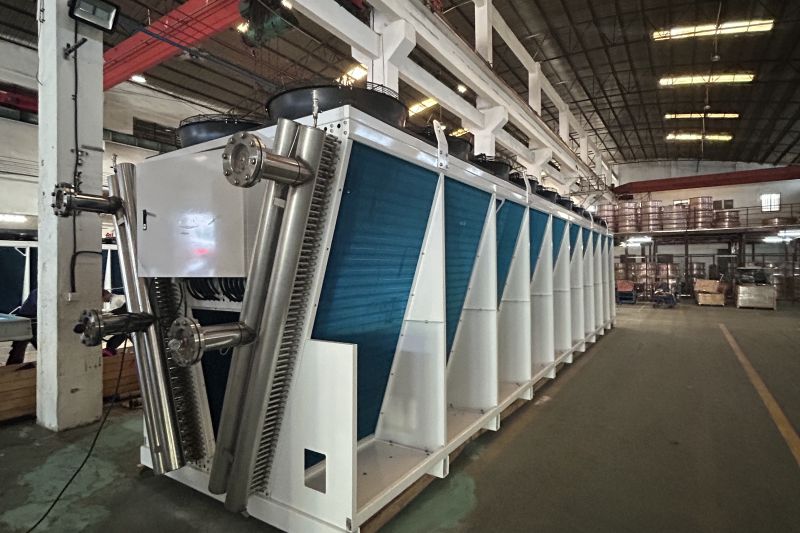
Documented pressure testing and inspection reports are non-negotiable for mission-critical cooling equipment.
Criterion 4: Intellectual Property Protection
For OEM buyers and brand owners, IP protection is often as important as product quality. Evaluate NDA availability, drawing control, confidential production areas, no-compete ethics, and data security practices.
Boyi Cooling treats client IP with strict confidentiality, signs NDAs, controls drawing access, and respects customer exclusivity. Our about us page outlines the governance principles behind every custom project.
Criterion 5: Global Delivery and Export Experience
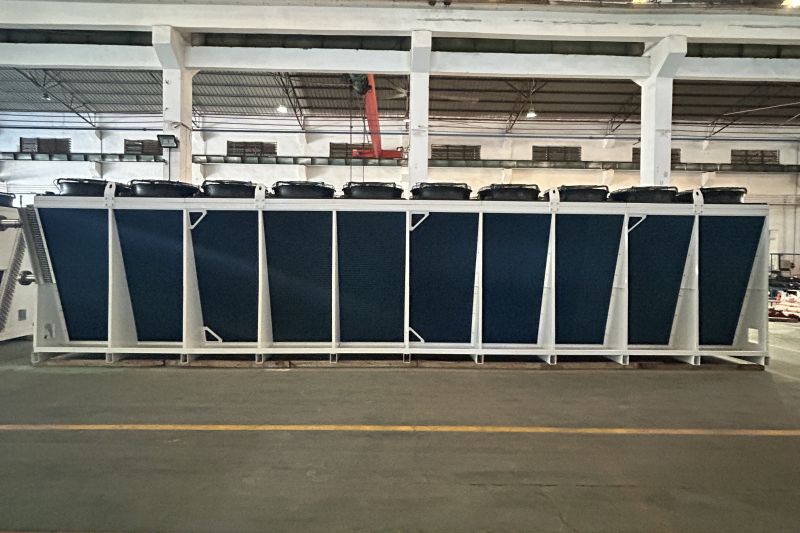
For international buyers, confirm export track record, Incoterms support, packing standards, shipping documentation, and delivery reliability. With exports to more than 30 countries, Boyi Cooling supports multiple Incoterms and provides full shipping documentation to reduce destination-port delays.
Criterion 6: After-Sales Support and Spare Parts
Strong after-sales support protects your investment and reduces total cost of ownership. Ask about installation guidance, commissioning assistance, spare parts policy, response time, and operator training.
Boyi Cooling provides installation manuals, commissioning guidance, and responsive technical support to keep dry coolers, condensers, and coils operating efficiently beyond 50,000 hours.
Red Flags That Should Disqualify a Supplier
Even when a quotation looks attractive, certain warning signs indicate elevated risk. Experienced procurement teams treat these as disqualifiers rather than negotiation points.
- No referenceable customers: A manufacturer unable to provide references for similar projects may lack relevant experience.
- Refusal to provide test reports: Leak-test, pressure-test, and inspection records should be available upon request.
- No quality certification: Absence of ISO 9001 or equivalent suggests weak process discipline.
- Vague Incoterms or shipping terms: Unclear responsibility for freight, insurance, and customs creates disputes.
- Unwillingness to sign an NDA: This signals poor IP awareness and increases design-replication risk.
- Excessive promised lead times: Unrealistic schedules often result in rushed production and quality shortcuts.
Watching for these red flags early saves time later and protects your project from avoidable disruption.
Supplier Scorecard Template
Use the following scorecard to compare heat exchanger manufacturers side by side. Assign a weight to each criterion based on your project priorities, score each supplier from 1 to 5, and multiply score by weight to obtain a weighted total. Weights can be adjusted for your situation: a buyer prioritizing rapid delivery might increase the global-delivery weight, while a brand owner may increase IP protection.
| Evaluation Criterion | Weight (%) | Supplier A | Supplier B | Supplier C |
|---|---|---|---|---|
| Technical Capability | 25 | |||
| Manufacturing Infrastructure | 20 | |||
| Quality Assurance | 20 | |||
| IP Protection | 10 | |||
| Global Delivery | 10 | |||
| After-Sales Support | 15 | |||
| Weighted Total | 100 |
A scorecard keeps the decision objective and defensible. It also clarifies which supplier best fits your specific risk profile, whether you prioritize engineering depth, delivery speed, or post-sale service.
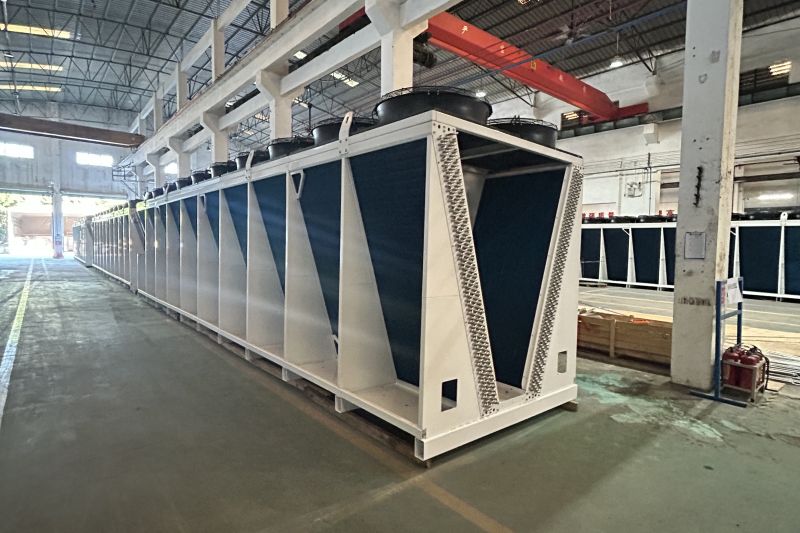
A supplier scorecard converts qualitative impressions into a measurable, auditable selection process.
How Boyi Cooling Aligns with Each Criterion
We believe supplier evaluation should be transparent. Below is a direct self-assessment of Boyi Cooling against the six criteria in this guide.
Technical Capability
20+ years of thermal engineering experience, in-house selection software, 2D/3D design support, and proven custom dry cooler and coil programs.
Manufacturing Infrastructure
Modern production base with automated fin presses, CNC tube processing, dedicated testing stations, and scalable capacity for large projects.
Quality Assurance
ISO 9001-aligned systems, helium leak detection, pressure testing, thermal verification, and documented inspection reports.
IP Protection
NDA support, restricted drawing access, segregated production options, and strict no-replication ethics for customer designs.
Global Delivery
Export experience across 30+ countries, multiple Incoterms, professional crating, and complete shipping documentation.
After-Sales Support
Installation manuals, commissioning guidance, spare parts availability, and responsive technical support throughout the equipment lifecycle.
Boyi Cooling welcomes factory audits, reference calls, and detailed technical discussions. We encourage buyers to apply the same scorecard to us that they apply to any other OEM heat exchanger manufacturer in China.
Conclusion
Choosing a reliable heat exchanger manufacturer requires more than comparing quotations. The best suppliers combine deep engineering capability, modern manufacturing infrastructure, rigorous quality systems, IP discipline, international logistics experience, and responsive after-sales support.
By applying the six criteria and scorecard in this guide, procurement teams can evaluate any dry cooler supplier objectively and reduce long-term risk. Boyi Cooling has built its operation around these same standards: more than 20 years of thermal engineering experience, customized manufacturing for data centers, mining, HVAC, and industrial applications, and exports to over 30 countries.
Ready to evaluate Boyi Cooling for your next project? Contact our team or request a quote and receive a transparent technical proposal backed by factory inspection reports and reference documentation.