Free Cooling Technology: Leveraging Ambient Air for Year-Round Energy Savings
- Share
- publisher
- Boyi Cooling
- Issue Time
- Aug 31,2026
Summary
Free cooling uses cold ambient air to reject heat without compressors, cutting data center cooling energy by 30-70%. Covers principles, climate analysis, economizer modes, and PUE improvement with Boyi Cooling dry coolers.
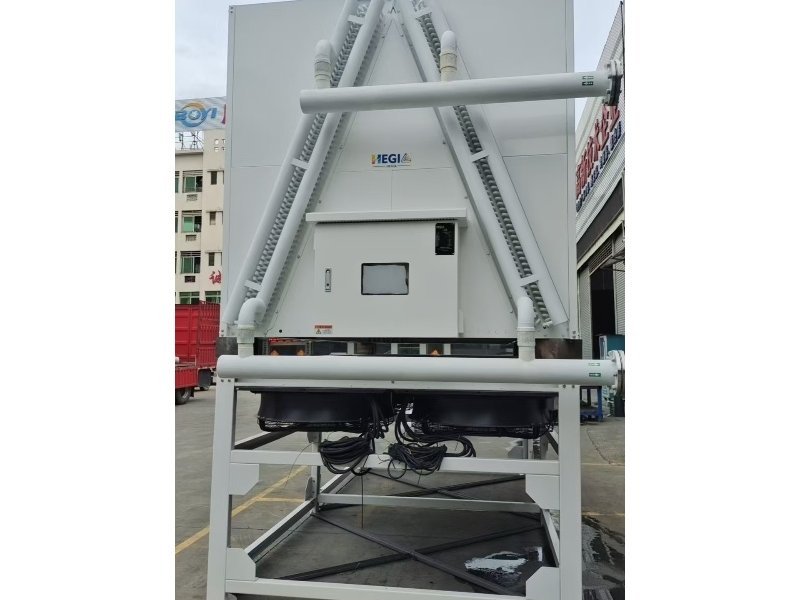
When data center operators talk about reducing Power Usage Effectiveness (PUE), one concept dominates the conversation: free cooling. Unlike mechanical refrigeration that relies on energy-hungry compressors, free cooling harnesses a freely available resource — cold ambient air — to reject heat from process fluids. The result is a dramatic reduction in cooling energy consumption, often 30–70% annually depending on climate. For hyperscale operators chasing PUE targets below 1.2 and colocation providers facing tightening energy regulations, dry cooler free cooling has evolved from an optional efficiency measure to a strategic imperative.
The Principle of Free Cooling: Thermodynamics in Practice
Free cooling operates on a straightforward thermodynamic principle: when outdoor air temperature is lower than the return fluid temperature of a cooling loop, heat can be rejected directly to the atmosphere without running a compressor. In a typical dry cooler system, warm process fluid (water or glycol mixture) circulates through finned tubes while large-diameter fans draw ambient air across the coil surface. The temperature differential drives heat transfer from the fluid to the air, cooling the fluid naturally.
The critical metric is the approach temperature — the difference between the ambient dry-bulb temperature and the fluid temperature leaving the dry cooler. A typical dry cooler can achieve an approach of 3–5°C. This means that if your return fluid temperature is 35°C, free cooling becomes viable whenever outdoor temperature drops below approximately 30°C. In most temperate and cold climates, this condition is met for thousands of hours each year, creating substantial windows where compressors can be idle or significantly offloaded.
Climate Analysis: Where Free Cooling Shines
The economic viability of free cooling is fundamentally tied to local climate. Understanding your site's free cooling hours — the annual hours when ambient temperature is low enough to fully or partially offset mechanical cooling — is the first step in evaluating any dry cooler investment.
Even in warmer climates such as the Middle East or Southeast Asia, nighttime temperature dips and winter seasons can still yield 1,000–2,000 free cooling hours. Hybrid systems that combine adiabatic cooling with dry cooler free cooling can extend these windows further by pre-cooling inlet air through evaporation during shoulder seasons, effectively lowering the ambient temperature threshold by 5–10°C.
Economizer Modes: Three Seasons of Operation
A well-designed dry cooler free cooling system operates across three distinct modes throughout the year, each matched to prevailing weather conditions:
During winter months when ambient temperature is 10–15°C below the required supply fluid temperature, the system operates with compressors completely off. Fans run at the minimum speed necessary to maintain the setpoint, and all heat rejection is handled by the dry cooler coil. This is the highest-efficiency mode, with energy consumption limited to fan power and circulation pumps — often just 5–10% of mechanical cooling energy.
In spring and autumn when ambient temperature approaches but does not exceed the fluid setpoint, the dry cooler handles a portion of the cooling load while a mechanical chiller handles the remainder. Control systems modulate fan speeds and valve positions to maximize free cooling contribution. This transitional mode can still deliver 40–60% energy savings compared to full mechanical operation.
During peak summer when ambient temperature exceeds the free cooling threshold, the system reverts to traditional compressor-based cooling. The dry cooler then functions as a condenser for the chiller, rejecting heat from the refrigerant circuit. While free cooling is unavailable, the system still benefits from efficient dry cooler design — optimized fin geometry, variable-speed fans, and low airside pressure drop all reduce overall energy consumption.
Energy Savings Calculation: The Numbers Behind Free Cooling
Quantifying free cooling savings requires analyzing the system's coefficient of performance (COP) across each operating mode. Consider a 1 MW IT load data center with a 1.2 MW total cooling load (including overhead) operating in a temperate climate with 4,500 annual free cooling hours:
| Operating Mode | Hours/Year | Avg. Cooling COP | Annual Energy (kWh) |
|---|---|---|---|
| Full Free Cooling | 2,800 | 15.0 | 224,000 |
| Partial Free Cooling | 1,700 | 6.5 | 313,846 |
| Mechanical Cooling | 4,060 | 3.5 | 1,392,000 |
| Annual Total | 8,560 | Mixed | 1,929,846 |
Without free cooling, the same facility would consume approximately 2,939,429 kWh annually (all mechanical at COP 3.5). The free cooling system delivers a 34% energy reduction — saving over 1 million kWh per year. At an industrial electricity rate of $0.12/kWh, that translates to $120,000+ in annual savings. In colder climates with 6,000+ free cooling hours, savings can exceed 50%.
Boyi Cooling designs each dry cooler system with climate-specific optimization, selecting fin density, tube material, and fan configuration to maximize free cooling hours for the deployment site. With 20+ years of thermal engineering experience and installations across 30+ countries, Boyi tailors every unit to local weather patterns and load profiles.
Dry Cooler Free Cooling vs. Air-Side Economizer
Two primary free cooling architectures compete in the data center space: waterside free cooling using dry coolers and air-side economization using direct outside air. Each approach has distinct advantages and trade-offs:
| Factor | Dry Cooler (Waterside) | Air-Side Economizer |
|---|---|---|
| Heat Transfer Medium | Closed-loop glycol/water | Direct outside air |
| Contamination Risk | Very low (closed loop) | Higher (particulates, humidity) |
| Retrofit Complexity | Moderate (external units) | High (large ductwork) |
| Space Requirement | Roof or ground pad | Large ducts, filters, dampers |
| Humidity Control | Excellent (sealed loop) | Requires active humidification |
| Maintenance | Low (coil cleaning, fans) | High (filters, belts, dampers) |
| Free Cooling Hours | More (lower approach temp) | Fewer (direct air comfort limits) |
Dry cooler systems generally offer broader free cooling availability because the closed-loop fluid can be cooled to within 3–5°C of ambient, whereas direct air systems must consider server inlet temperature and humidity constraints that typically require a wider operating margin. The sealed nature of waterside systems also eliminates contamination risks — a critical advantage for data centers with sensitive electronic equipment.
Integration with Liquid Cooling: The Heat Rejection Back-End
As data center heat densities climb beyond 50 kW per rack with AI and high-performance computing workloads, direct liquid cooling (DLC) is becoming mainstream. In these architectures, cooling distribution units (CDUs) capture heat at the chip level using coolant flowing through cold plates, then reject that heat to a facility water loop. The terminal heat rejection device — the component that ultimately dissipates heat to the atmosphere — is almost always a dry cooler or cooling tower.
This integration creates a powerful synergy: the liquid cooling system achieves extremely efficient heat capture at the source, while the dry cooler provides energy-efficient free cooling at the back-end. During cold weather, the entire heat rejection chain can operate without compressor energy, delivering facility-wide COPs exceeding 50. This is precisely why hyperscalers in Nordic regions are achieving PUE values below 1.1.
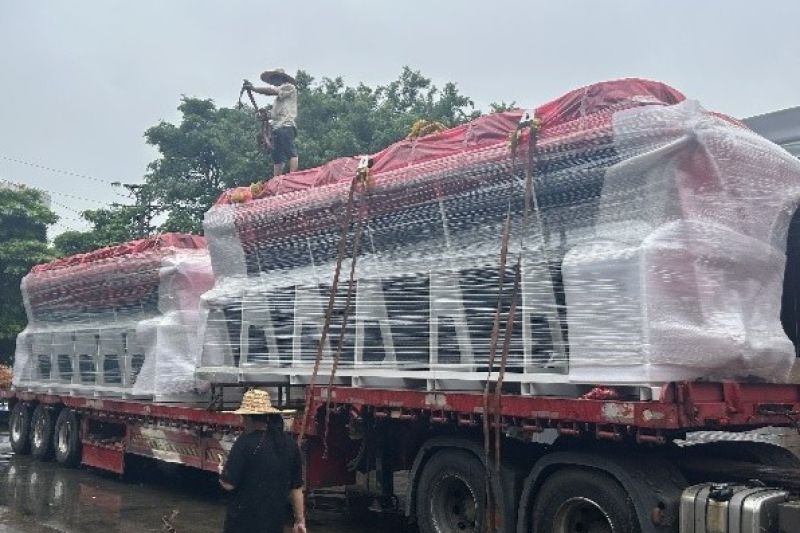
Boyi Cooling has delivered custom dry cooler free cooling systems for liquid-cooled data centers, with units rated from 100 kW to 3.3 MW. These systems are engineered to match the specific CDU supply and return temperatures, optimizing approach temperatures and maximizing annual free cooling hours. The company's manufacturing flexibility — including options for stainless steel tubes and fins for corrosion resistance, electrophoretic coating for harsh environments, and variable-speed EC fans for precise control — ensures that each installation is purpose-built rather than adapted from a catalog product.
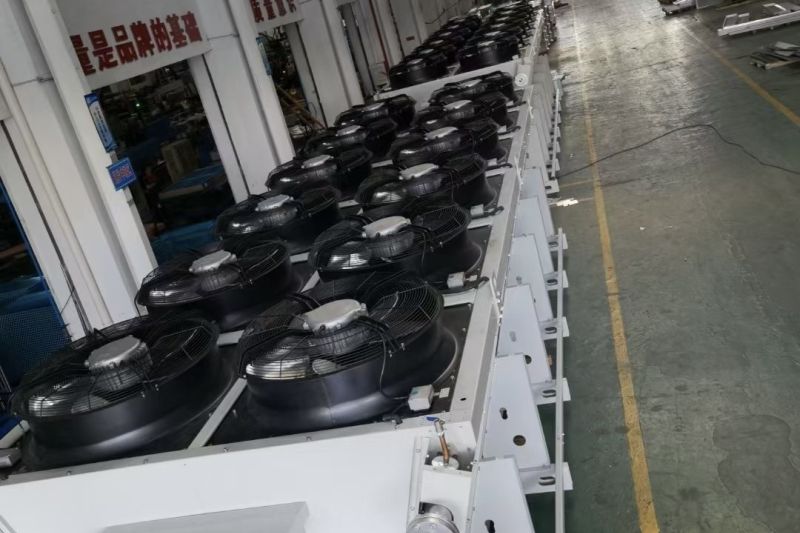
Featured: Inverted V Dry Cooler for Free Cooling Applications
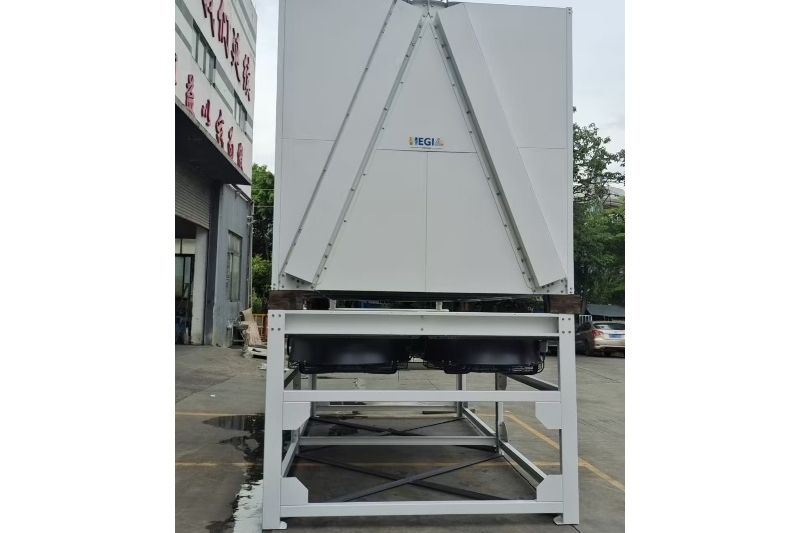
The Boyi Case: Free Cooling System for Liquid-Cooled Data Center
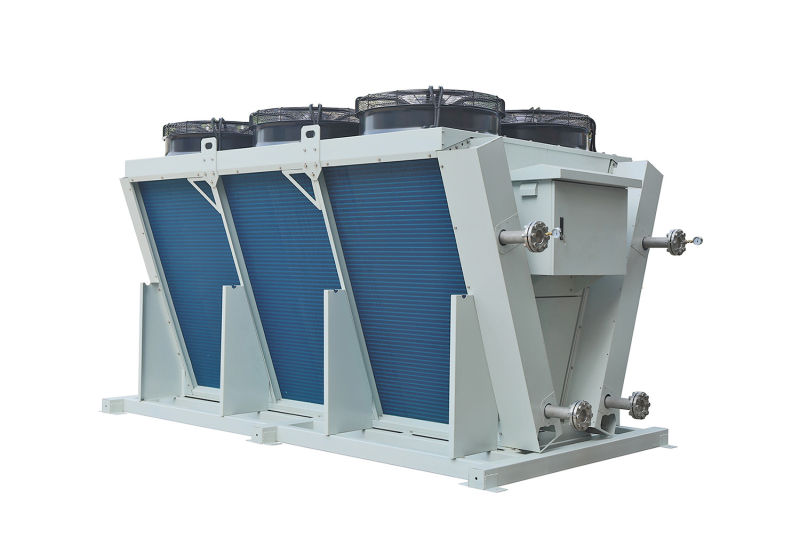
One of Boyi Cooling's flagship projects involved supplying a custom dry cooler free cooling system for a liquid-cooled data center in a temperate climate zone. The facility required 550 kW of heat rejection capacity to serve a CDU loop operating at 35°C supply / 45°C return. Boyi engineered a V-type dry cooler with copper tubes and aluminum fins, selected for the site's moderate humidity and air quality conditions.
The system was configured with three operational modes: full free cooling (ambient < 28°C), partial free cooling (28–38°C ambient with assistive compressor), and mechanical cooling (ambient > 38°C). Variable-speed EC fans were integrated with the facility's building management system via Modbus, enabling real-time optimization of fan speed against cooling load and ambient conditions.
The result: 4,200 annual free cooling hours, a 42% reduction in cooling energy compared to the baseline all-mechanical scenario, and a measured facility PUE of 1.18 during winter months. The project demonstrated that well-engineered dry cooler systems can bring hyperscale-class efficiency to mid-tier facilities.
Boyi Cooling's engineering team approaches each project with a site-specific methodology. Rather than offering off-the-shelf units, the company conducts a full thermal analysis covering local ASHRAE climate data, load profiles, fluid specifications, and installation constraints. This process leverages Boyi's two decades of heat exchanger manufacturing experience and a track record of successful deployments across 30+ countries. To discuss your project requirements, contact Boyi's engineering team directly.
PUE Impact: How Free Cooling Enables Sub-1.2 Targets
Power Usage Effectiveness (PUE) is the industry standard metric for data center energy efficiency, defined as total facility power divided by IT equipment power. A PUE of 1.0 represents perfect efficiency (all power goes to IT), while typical legacy facilities operate at 1.5–2.0. Modern hyperscale data centers target PUE values below 1.2, and the cooling system is the single largest lever for closing that gap.
In a conventional data center, cooling infrastructure (chillers, pumps, cooling towers) accounts for 30–40% of total facility power. Free cooling attacks this directly: during full free cooling operation, chiller power drops to near zero, and only fans and pumps remain. The impact on PUE is immediate and measurable. Consider a 10 MW facility consuming 15 MW total (PUE 1.5): if free cooling reduces cooling energy by 40% annually, the new total is approximately 13 MW, yielding PUE 1.3. In cold climates with 6,000+ free cooling hours, the same system can push PUE below 1.15.
Design Considerations for Free Cooling Dry Coolers
Achieving maximum free cooling hours requires careful attention to several design parameters that distinguish purpose-built free cooling dry coolers from standard units:
Real-World Free Cooling Performance Across Climates
Field data from deployed Boyi dry cooler systems illustrates the climate-dependency of free cooling savings. In Stockholm, Sweden, a 1.5 MW V-type dry cooler achieved 5,820 free cooling hours in its first year of operation, reducing cooling energy by 61% compared to the previous chiller-only system. The facility's annual PUE dropped from 1.42 to 1.19.
In Singapore, where ambient temperatures rarely fall below 25°C, the same model dry cooler still contributed 1,100 free cooling hours, primarily during nighttime and monsoon periods. While the savings percentage was lower at 14%, the absolute energy reduction remained significant at 180,000 kWh annually. This underscores that free cooling is not an all-or-nothing proposition — even partial availability delivers measurable ROI.
The Future of Free Cooling: Trends and Innovation
As data center heat densities continue to rise and energy regulations tighten globally, free cooling technology is evolving rapidly. Several trends are reshaping the landscape:
- Higher fluid temperatures: Modern servers tolerate higher inlet temperatures (27–32°C per ASHRAE TC9.9), directly expanding free cooling windows by raising the temperature threshold at which free cooling becomes available.
- AI-driven optimization: Machine learning algorithms analyze weather forecasts, load patterns, and thermal inertia to pre-position cooling modes, maximizing free cooling utilization while preventing temperature excursions.
- Hybrid adiabatic-dry systems: Combining dry cooling with evaporative pre-cooling extends free cooling availability into warmer months, particularly effective in dry climates where evaporation delivers significant temperature reduction.
- Heat recovery integration: Free cooling dry coolers are increasingly designed as part of heat recovery systems, where rejected heat is captured for district heating or industrial processes, further improving overall energy utilization.
- Advanced materials: New fin coatings, enhanced tube geometries, and composite materials are pushing approach temperatures lower, effectively adding free cooling hours without increasing unit size.
Boyi Cooling stays at the forefront of these developments, continuously refining its dry cooler designs to incorporate emerging best practices. The company's engineering team works closely with data center operators to implement site-specific optimizations, from advanced manufacturing capabilities to post-installation performance monitoring. For facilities planning new construction or retrofitting existing cooling infrastructure, requesting a custom dry cooling consultation early in the design process can unlock significant lifecycle savings.
Conclusion: Free Cooling as a Strategic Investment
Free cooling is not merely an efficiency upgrade — it is a strategic infrastructure decision that affects a data center's operating cost, regulatory compliance, and competitive positioning for the next two decades. The technology is mature, the economics are compelling, and the climate data is available. The question is not whether to implement free cooling, but how to optimize it for each specific site.
Dry cooler-based free cooling systems offer the most practical and scalable approach for the majority of data center operators. They provide closed-loop contamination protection, broad free cooling availability, moderate retrofit complexity, and low maintenance requirements. When engineered by an experienced manufacturer like Boyi Cooling — with 20+ years of thermal engineering expertise, 30+ countries of deployment experience, and a commitment to custom solutions — these systems deliver measurable, compounding returns throughout their operational life.
Whether your facility is targeting PUE 1.3 or pushing toward sub-1.2 territory, free cooling with purpose-built dry coolers provides the most reliable path to meaningful, lasting energy reduction. Explore Boyi Cooling's range of dry cooler products or contact the engineering team to begin a site-specific free cooling analysis.