Edge Computing and Distributed Cooling: New Challenges for Compact Heat Exchangers
- Share
- publisher
- Boyi Cooling
- Issue Time
- Sep 25,2026
Summary
Edge computing is scattering thousands of small data facilities closer to users, and they cannot be cooled like hyperscale campuses. This article examines the core edge constraints - limited space, unmanned sites, harsh environments - and shows why compact V-type dry coolers, IoT remote monitoring, modular pay-as-you-go capacity, and ruggedized closed-loop design have become the standard for distributed cooling at the edge.
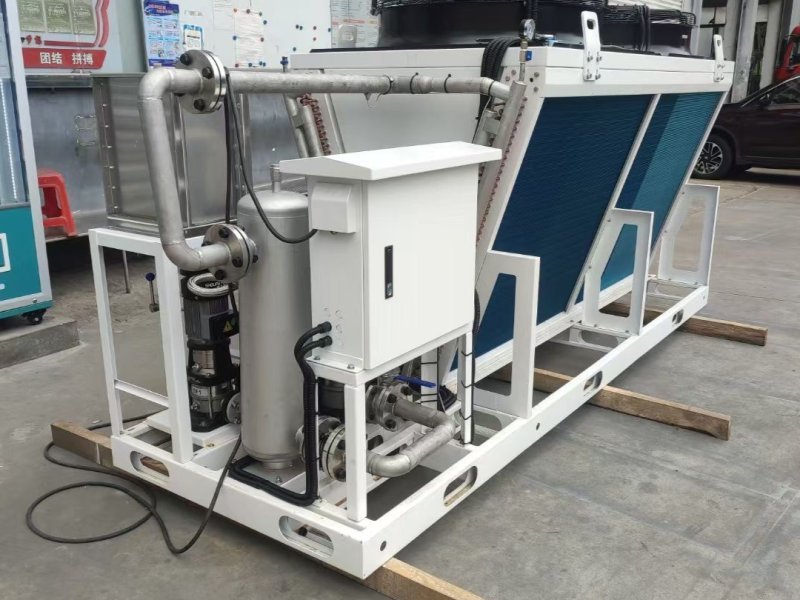
The data center landscape is splitting in two. On one side, hyperscale campuses keep growing larger, concentrating tens of megawatts of compute in a handful of locations. On the other side, a quiet revolution is underway: edge computing, which pushes small, distributed data facilities out to where users and devices actually are — at the base of 5G towers, inside factories, on retail premises, at traffic intersections, and in thousands of smaller cities that will never host a hyperscale campus. Industry analysts consistently project double-digit annual growth for edge infrastructure through 2030, driven by autonomous systems, industrial IoT, video analytics, and latency-sensitive 5G services.
This fragmentation creates an entirely new cooling problem. The chilled-water plants, raised floors, and dedicated operator teams of a hyperscale site simply do not exist at the edge. What replaces them must be compact, rugged, remotely manageable, and nearly maintenance-free. In this article, we examine why edge facilities strain conventional thermal designs, and how modern dry coolers — particularly compact V-type and vertical configurations — have emerged as the practical answer for distributed cooling at the edge.
Why Edge Computing Breaks the Traditional Cooling Model
Edge sites inherit none of the advantages that make large data centers efficient. Instead, they operate under a set of constraints that traditional cooling architectures were never designed to satisfy:
Severely Limited Space
Edge facilities are often retrofitted into telecom shelters, small concrete rooms, or rooftop cabinets. There is rarely room for a large field-erected cooling tower, an expansive chiller yard, or even generous service clearances. Every square meter of the thermal system competes with racks, batteries, and power equipment.
Remote & Distributed Locations
An operator may be responsible for hundreds of edge sites scattered across a region. A cooling problem that takes four hours to resolve at a central campus may take days at a rural site three hours from the nearest technician. Design decisions must assume that help is far away.
Minimal On-Site Staff
Most edge sites are genuinely unmanned. There is no plant operator to check gauges, clean strainers, treat water, or notice a failing fan bearing before it escalates. The cooling system must be self-sufficient between visits that may be weeks or months apart.
Harsh Ambient Environments
Edge equipment lives where people and machines work: beside dusty gravel roads, in coastal salt air, on rooftops exposed to full sun, or in industrial zones with corrosive atmospheres. Unlike a filtered indoor plant room, the heat rejection equipment faces the environment directly, every hour of the year.
Water-based systems — open cooling towers and evaporative equipment — amplify nearly all of these problems. They require water treatment chemistry, refilling logistics, drains, and regular biological monitoring: tasks that are impractical at an unmanned site. A closed-loop dry cooler eliminates water entirely, which is precisely why it has become the default choice for edge thermal design.
Compact Dry Cooler Solutions: Small Footprint, Full Capability
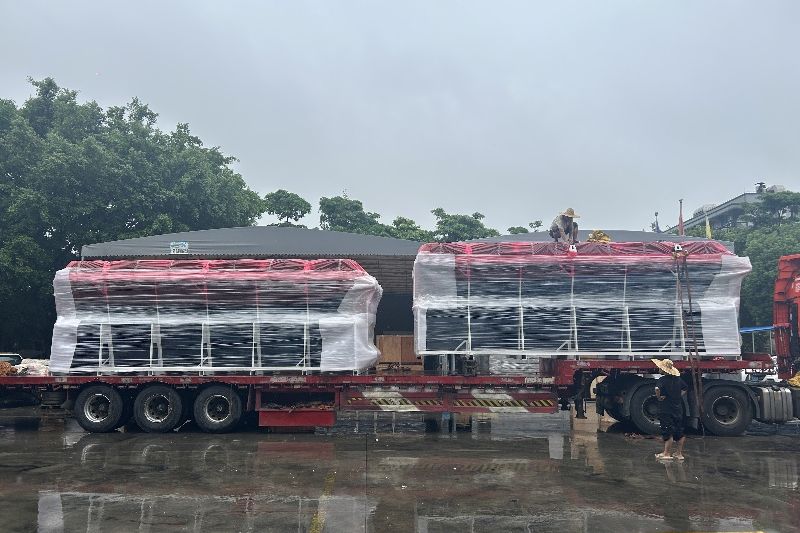
The core engineering challenge at the edge is simple to state and hard to solve: reject a meaningful amount of heat — typically 30 kW to 300 kW per site — from a very small plot. Modern compact dry coolers attack this problem from several directions at once.
V-Type Configurations: Maximum Coil in Minimum Ground Area
By angling two coil banks into a V above the fan section, a V-type dry cooler fits roughly twice the coil face area into the same footprint as an equivalent flat unit. For edge sites where the equipment must share a small yard, a rooftop, or a compound next to the shelter, this geometry is frequently the difference between fitting and not fitting. Vertical (V-coil, vertical-airflow) formats push the advantage further, presenting a narrow profile that can sit against a wall or beside a cabinet.
Engineered for Tight Installation Envelopes
Compact does not mean undersized. A properly specified compact dry cooler for an edge site is engineered around the real constraints of the location: height limits under cable trays, restricted service access on one or two sides, prevailing wind direction, and even noise ordinances in mixed-use areas. Coil circuiting, fan selection, and header orientation are all adjusted so that performance is preserved inside the envelope, not just on the datasheet.
Remote Monitoring: Managing Hundreds of Sites from One Screen
When your fleet of cooling assets spans an entire region, visibility becomes as important as capacity. This is where the latest generation of dry coolers with integrated smart controls fundamentally changes operations. Instead of a coil and fans with a simple on/off contactor, each unit becomes a networked device that reports its own health.
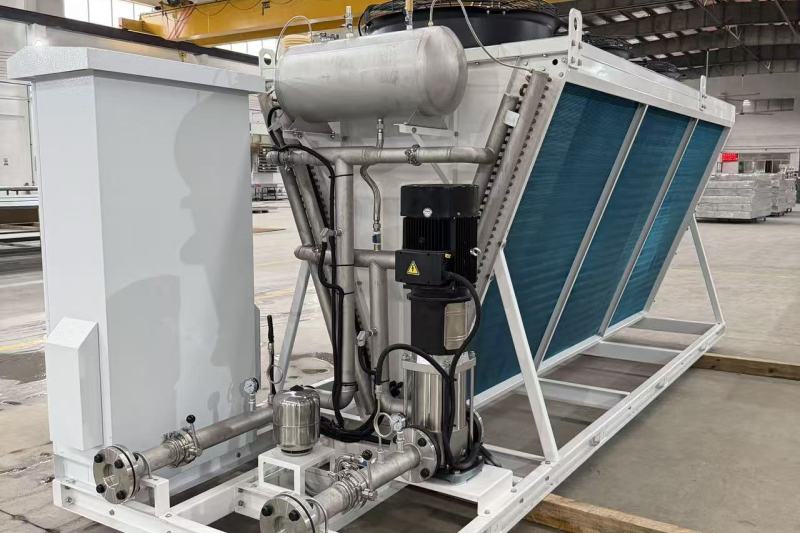
Key remote capabilities that edge operators should demand from their cooling supplier include:
| Capability | What It Delivers at the Edge | Typical Interface |
|---|---|---|
| Fan speed & current telemetry | Detect bearing wear, motor degradation, and blocked coils before failure | Modbus RTU / TCP, BACnet |
| Fluid temperature monitoring | Verify leaving-fluid setpoints; catch free-cooling opportunities automatically | Modbus registers |
| Speed control via 0–10V / PWM | Match cooling to load; cut fan energy 30–50% versus fixed-speed operation | 0–10V, PWM, EC motor bus |
| Alarm relay & event log | Escalate faults to the NOC with timestamped history for root-cause analysis | Dry contact + Modbus |
| Anti-freeze & drain-back logic | Protect the loop in unattended winter conditions without staff intervention | Integrated controller |
Integration matters as much as instrumentation. The cooling unit should speak the same protocol language as the site's BMS or edge management platform, so a single dashboard can correlate rack inlet temperatures, power draw, and cooler status. Boyi Cooling equips its units for Modbus and BACnet integration as standard practice on customized orders, allowing fleet-wide monitoring of distributed cooling assets from one pane of glass.
Modular Design: Pay-as-You-Grow Cooling Capacity
Edge demand is notoriously difficult to forecast. A site commissioned for a 5G aggregation point may suddenly need double the compute when it also becomes an IoT gateway hub or a local CDN node. Overbuilding cooling on day one wastes capital; underbuilding forces disruptive retrofits later. Modular cooling architecture resolves this tension.
Because V-type dry coolers are self-contained factory-assembled modules, capacity can scale in clean increments. An edge site can start with one 60 kW unit and add a second, third, or fourth module as racks are deployed — each simply piped into the common loop and networked to the same controller. The benefits compound:
This "pay-as-you-grow" model mirrors how edge operators buy IT hardware, which is exactly why it has become the dominant procurement pattern for distributed facilities. It also de-risks site selection: because each module is compact and self-supporting, capacity can be added wherever physical space allows, without redesigning the site.
Ruggedization: Surviving Where IT Equipment Cannot
An edge dry cooler does not enjoy the protected environment of an indoor plant room. It must withstand weather, contamination, and abuse that would end most indoor-grade equipment quickly. When evaluating units for edge deployment, these ruggedization parameters deserve the closest scrutiny:
| Parameter | Edge-Grade Target | Why It Matters |
|---|---|---|
| Ingress protection | IP55 motors; sealed junction boxes | Dust and water jets are routine outdoors, not exceptions |
| Operating range | -30°C to +50°C ambient | Covers desert rooftops and northern winters with one SKU |
| Coil protection | E-coated or epoxy-coated fins in corrosive zones | Coastal salt and industrial atmospheres destroy bare aluminum fins |
| Freeze protection | Glycol loop or drain-down design | Unattended sites cannot respond to cold snaps manually |
| Structure | Hot-dip galvanized or stainless frame | 20-year structural life with zero repainting cycles |
| Fan guarding | Full-perimeter mesh, vandal-resistant | Many edge sites are publicly accessible |
The -30°C to +50°C envelope is worth emphasizing. A single specification that covers both extremes dramatically simplifies fleet logistics: an operator standardizes on one ruggedized design language across an entire geography instead of maintaining winter and summer variants of the same site. Wide-range EC fans, low-temperature seals, and correctly specified glycol concentrations make this possible without derating capacity in normal conditions.
Low Maintenance by Design: Built for Unmanned Sites
Reliability at the edge is not achieved through maintenance schedules — it is achieved through design decisions that reduce the amount of maintenance required in the first place. A closed-loop dry cooler is inherently simpler than any water-based alternative: there is no evaporation, no water treatment, no basin to clean, no fill pack to replace, and no legionella management program. What remains is a coil, fans, and a controller — and each can be engineered for long unattended life.
- Fewer moving parts: Direct-drive EC fans eliminate belts, pulleys, and gearboxes — the highest-wear items in traditional fan assemblies.
- Sealed-loop chemistry: A closed glycol loop is filled once at commissioning and checked annually; there is no continuous water-quality workload.
- Self-cleaning airflow: Wide fin spacing options resist dust bridging in rural and roadside locations, preserving capacity between service visits.
- 50,000+ hour design life: Quality units are engineered for 50,000+ hours of continuous operation — well beyond five years of round-the-clock running — with L10 fan bearing life matched to the same figure.
- Hot-swappable components: Modular fan plates and replaceable coil sections allow a single technician to restore full capacity in one visit.
For an operator managing a distributed fleet, the maintenance metric that matters is not the datasheet capacity — it is truck rolls per site per year. Every design decision above exists to push that number toward zero, because every avoided site visit saves travel time, labor, and the risk of an extended outage at a facility with no one on site to notice.
How Boyi Cooling Engineers for the Edge
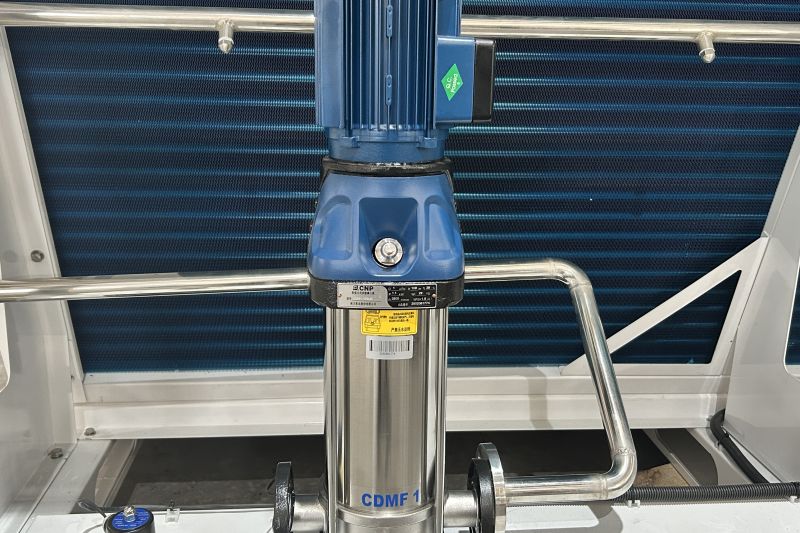
Edge projects rarely succeed with catalog products, because by definition the edge is non-standard. This is where Boyi Cooling's two decades of thermal engineering experience and customized manufacturing capability make a measurable difference. With 20+ years in heat transfer engineering, a fully customizable production line, and deliveries to 30+ countries, Boyi approaches each edge deployment as an engineering problem to solve, not an SKU to ship.
The process is deliberately collaborative: the customer shares site drawings, load profiles, ambient data, and monitoring requirements; Boyi's engineers return a thermally verified design with performance curves at the actual site conditions — not laboratory conditions. That step matters more at the edge than anywhere else, because a 10% capacity shortfall at an unmanned site is not a comfort complaint; it is a shutdown. Buyers who want to pressure-test a supplier's claims should ask specifically for site-condition performance verification, and Boyi provides it as standard on custom projects.
Market Outlook: The Edge Decade Ahead
Every structural trend in computing — 5G densification, industrial IoT, autonomous vehicles, real-time video AI, sovereign cloud initiatives — adds momentum to the edge buildout. Each new edge node, whether a 20 kW cabinet behind a factory or a 200 kW micro facility in a second-tier city, needs thermal infrastructure that shares the same DNA: compact, waterless, connected, and rugged.
For cooling suppliers, this shifts the product conversation from raw capacity to deployability: how fast a unit can be shipped, lifted, piped, and left to run unattended for years. For buyers, it shifts supplier selection toward manufacturers who can deliver customized compact designs quickly and verify performance at real site conditions. The organizations that build their edge fleets on closed-loop dry cooler architecture today will spend the next decade adding capacity in weeks while their competitors drain water towers and schedule filter changes.
Frequently Asked Questions
What size dry cooler does a typical edge data center need?
Most edge facilities fall between 30 kW and 300 kW of heat rejection. A useful planning rule is to size the dry cooler to the site's ultimate IT load — or deploy multiple smaller modules that can be staged as the load grows. Contact our engineers with your load profile for a thermally verified selection.
Can a dry cooler really run unattended for months?
Yes — that is the design intent. Closed-loop dry coolers have no water treatment workload, direct-drive EC fans eliminate belt maintenance, and integrated controllers handle freeze protection and speed control automatically. With remote telemetry reporting fan health and fluid temperatures, a site can safely run between quarterly or even semi-annual inspections.
How do dry coolers protect against freezing at unmanned edge sites?
Two approaches are common: a glycol-loop design that tolerates deep sub-zero temperatures, or a drain-down design that empties the coil when the system is idle. The right choice depends on your redundancy requirements and climate; Boyi Cooling supplies both configurations customized to site conditions.
Can edge dry coolers integrate with our existing monitoring platform?
Yes. Modern units support Modbus RTU/TCP and BACnet, exposing fan speed, motor current, fluid temperatures, and alarm states to your NOC or BMS. Boyi Cooling integrates these protocols on customized orders so distributed cooling assets appear alongside racks and power systems in a single dashboard.
Planning an Edge or Distributed Data Center Build?
Boyi Cooling delivers compact, rugged, remotely manageable dry coolers customized to your exact site envelope — backed by 20+ years of thermal engineering and exports to 30+ countries. Explore our full range of dry coolers and heat exchangers, or request a thermally verified design for your next site.