Custom vs. Standard Heat Exchangers: When Does Customization Pay Off?
- Share
- publisher
- Boyi Cooling
- Issue Time
- Aug 13,2026
Summary
Learn when a custom heat exchanger outperforms a standard unit. Boyi Cooling explains the customization process, cost trade-offs, and real case studies from data center and greenhouse projects.
Every procurement team eventually faces the same question: should we order a standard heat exchanger off the catalog, or invest in a custom heat exchanger engineered around our exact thermal load, footprint, and environment? Off-the-shelf units ship faster and cost less upfront, while bespoke designs eliminate performance compromises that inflate energy and maintenance bills for years.
At Boyi Cooling, our 20+ years of thermal engineering experience, export track record across 30+ countries, and end-to-end customized manufacturing workflow help buyers decide confidently. This guide compares custom versus standard heat exchangers, explains Boyi Cooling's four-step customization process, and shares two real-world case studies.
When a Standard Heat Exchanger Is the Right Choice
Standard heat exchangers and dry coolers work well when an application matches common requirements. A catalog model is usually the pragmatic choice when:
- Moderate heat loads: Thermal demand fits the capacity curve of mass-produced models under conventional ambient conditions.
- Common fluids: Water, glycol mixtures, or standard refrigerants at typical temperature spreads.
- No unusual space constraints: Standard V-type, flat-type, or vertical cabinets fit without structural changes.
- Budget-sensitive procurement: Upfront capital is the dominant constraint and slight efficiency trade-offs are acceptable.
- Fast delivery: Equipment must arrive within weeks without custom engineering lead time.
For these situations, Boyi Cooling offers standard dry coolers, condenser coils, evaporator coils, and HVAC coils that meet common industrial specifications. Choosing a standard unit means matching a proven design to a proven application.
Standard products excel when your job is predictable. The risk arises when a catalog unit is forced into an application it was never sized for, leading to short cycling, insufficient capacity, or accelerated wear.
When Customization Becomes Essential
Some applications require a custom heat exchanger to deliver reliability, efficiency, and service life. Boyi Cooling recommends customization when one or more of these conditions apply:
High Heat Density
AI clusters and mining halls can reject megawatts per footprint area, requiring larger surface area and uniform airflow.
Extreme Environments
Desert heat above 45°C, coastal salt air, or high altitude demand special materials, coatings, and oversized surfaces.
Space Constraints
Rooftop rooms, narrow yards, and containerized edge sites need non-standard footprints or vertical airflow.
Noise-Sensitive Areas
Urban data centers and hospital campuses may need low-noise fans, acoustic enclosures, or variable-speed EC motors.
Non-Standard Fluids
Brines, dielectric coolants, and corrosive fluids can require stainless steel tubes or protective coatings.
Integration Requirements
BMS, chilled-water loops, and free-cooling architectures often need custom manifolds, valves, and sensor packages.
In these scenarios, a custom dry cooler or coil is a risk-mitigation strategy. Upfront engineering prevents retrofit work, downtime, and inflated operating costs later.
Boyi Cooling's Four-Step Customization Workflow
Boyi Cooling simplifies custom equipment procurement into four transparent stages that keep projects on schedule and on budget.
Requirements Communication
Our engineers collect thermal duty, fluid data, flow rate, temperatures, ambient conditions, noise limits, footprint, and control expectations.
Quick Quote and Design Review
We return a detailed quotation with coil geometry, materials, fan configuration, performance curves, and delivery timeline for client review.
Manufacturing and Quality Testing
Units are manufactured with full traceability, including welding inspection, helium leak detection, pressure testing, and thermal verification.
Installation Guidance and Debugging
We provide installation manuals, commissioning support, and operator training to verify control integration and maintenance routines.
This approach means even specialized units, such as our 2.5MW stainless steel tube V-type dry cooler, move smoothly from inquiry to operation.
Cost Analysis: Upfront Investment versus Long-Term Savings
The true cost of a heat exchanger extends beyond the purchase price. A total-cost-of-ownership analysis usually reveals whether customization is justified.
| Cost Factor | Standard Unit | Custom Unit |
|---|---|---|
| Initial CAPEX | Lower purchase price, faster procurement | Higher engineering and material cost |
| Energy Consumption | May be oversized or undersized, increasing fan and pump power | Optimized coil and fan selection can reduce power draw |
| Maintenance | Standard spare parts readily available | Built for duty cycle, often with longer service intervals |
| Downtime Risk | Higher if unit operates outside design envelope | Lower when matched to actual load and environment |
| Replacement Cycle | May need earlier replacement if mismatched | Correctly specified units often exceed 50,000 operating hours |
For example, a data center cooling system running continuously can consume more electricity in two years than its initial equipment cost. A custom dry cooler sized for the actual load, with variable-speed EC fans and optimized fin spacing, can recover its premium through energy and maintenance savings over five to ten years.
Key Customization Parameters to Discuss with Your Manufacturer
Providing these parameters when you request a quote produces a faster, more accurate proposal:
- Thermal duty and fluid data: Heat rejection, fluid type, flow rate, inlet and outlet temperatures.
- Design ambient conditions: Maximum dry-bulb and wet-bulb temperatures, altitude, wind exposure, and snow or seismic loads.
- Footprint and layout: Maximum dimensions, access clearances, and airflow direction.
- Material preferences: Copper, stainless steel, aluminum, or coated fins based on fluid chemistry.
- Noise constraints: Sound power limits at specified distances.
- Control and connectivity: Fan control strategy, BMS protocols such as Modbus, and sensor integration.
- Coating and finish: Electrophoretic, epoxy, or specialized treatments for harsh environments.
Boyi Cooling's engineers use this data to select coil geometry, fin density, tube diameter, fan size, motor type, and casing. The result is equipment that fits the application rather than the other way around.
Case Study 1: High-Temperature Adaptation for a Dubai Data Center
A hyperscale data center in Dubai required a dry cooler solution for ambient conditions regularly exceeding 45°C. Catalog units sized for temperate climates could not maintain the required glycol outlet temperature, which would have forced supplementary chillers and degraded PUE.
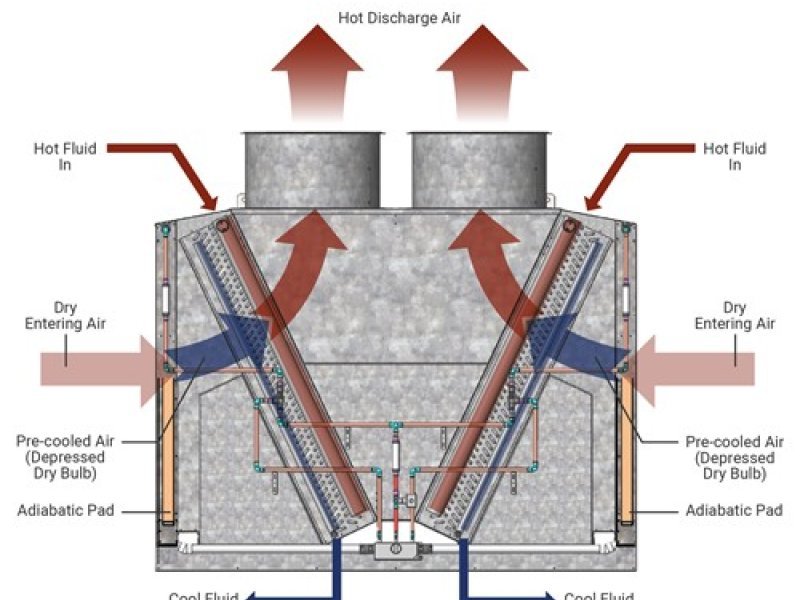
Boyi Cooling engineered a 930KW copper tube V-type dry cooler with wet curtain pre-cooling. The design oversized the coil surface area, selected high-efficiency copper tubes with aluminum fins, and integrated an adiabatic wet-pad section controlled by ambient sensors to lower entering air temperature during peak hours.
The system maintained design leaving-fluid temperature across the full ambient range, avoided chiller runtime, and preserved efficiency targets. This case shows how customization pays off when environmental extremes push standard equipment beyond its limits.
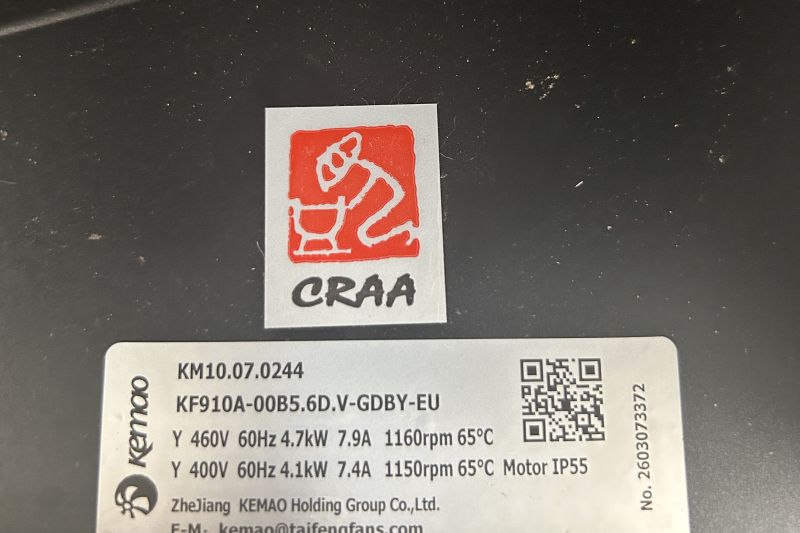
Custom coil geometry and material selection are critical when ambient conditions exceed standard catalog assumptions.
Case Study 2: Dual-Function Heating and Cooling Coil for Greenhouse Cultivation
A large greenhouse operation needed a single coil system that could heat seedlings at night and remove heat and humidity during sunny days. Separate heaters and coolers would have consumed growing space and complicated piping.
Boyi Cooling supplied a customized one-row heater and two-row cooler coil. The copper-tube, aluminum-fin unit was valved so hot water flowed through the heater row in winter and chilled water through the cooler rows in summer. Its compact footprint allowed installation above crop aisles without shading plants.
This project shows that customization is not only about extreme capacity; sometimes the value lies in combining functions and simplifying controls.
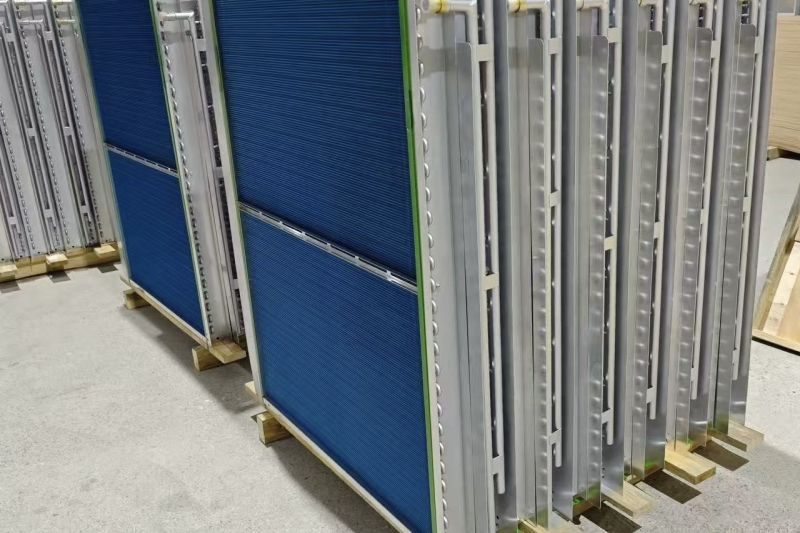
A dual-function coil can reduce equipment count and simplify climate control in horticultural facilities.
Decision Framework: Should You Customize?
Use these questions to decide between a standard or custom heat exchanger:
- Does your thermal load fall comfortably within the capacity curves of readily available standard models?
- Are your ambient conditions within the range for which standard units are typically rated?
- Is there sufficient physical space for a standard footprint and airflow arrangement?
- Will the unit operate with common fluids and temperatures, or do you need special materials?
- Is the installation in a noise-sensitive location requiring acoustic treatment or low-speed fans?
- Does the project have a tight delivery schedule that cannot accommodate custom engineering lead time?
- Is the expected operating life long enough that small efficiency gains will compound into significant savings?
If you answered yes to questions 1 through 4 and no to question 5, a standard unit is likely sufficient. If you answered no to any of questions 1 through 4, or yes to questions 5 and 7, a custom solution from Boyi Cooling is likely the better investment.
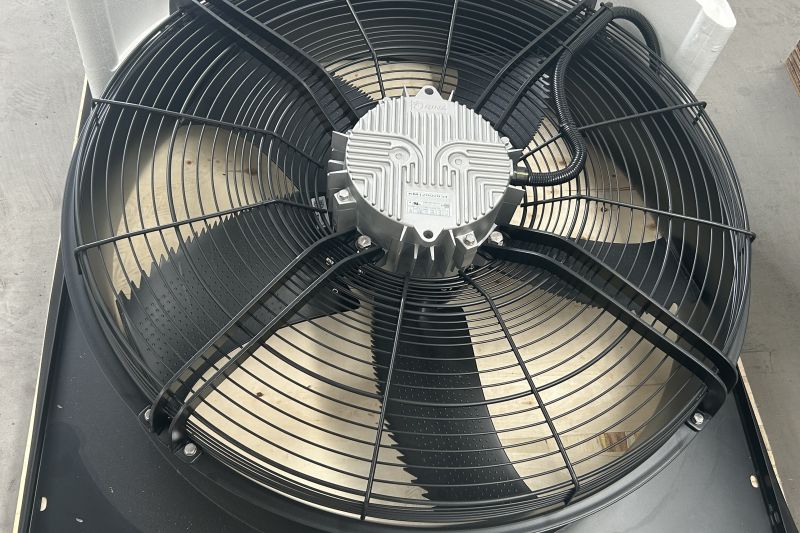
Material selection, fin geometry, and coil depth are among the variables Boyi Cooling optimizes during custom design.
Conclusion
Choosing between standard and custom heat exchangers is a question of fit. Standard products suit common loads and environments. Custom products win when high heat density, extreme climates, tight footprints, noise limits, non-standard fluids, or integration demands make catalog performance unacceptable.
At Boyi Cooling, our 20+ years of thermal engineering experience, customized manufacturing capability, and global export track record give buyers a transparent path from requirement to operation. Whether you need a catalog dry cooler or a fully tailored heat rejection system, contact our team or request a quote. The right level of customization protects capital, lowers operating costs, and extends equipment life well beyond 50,000 hours.